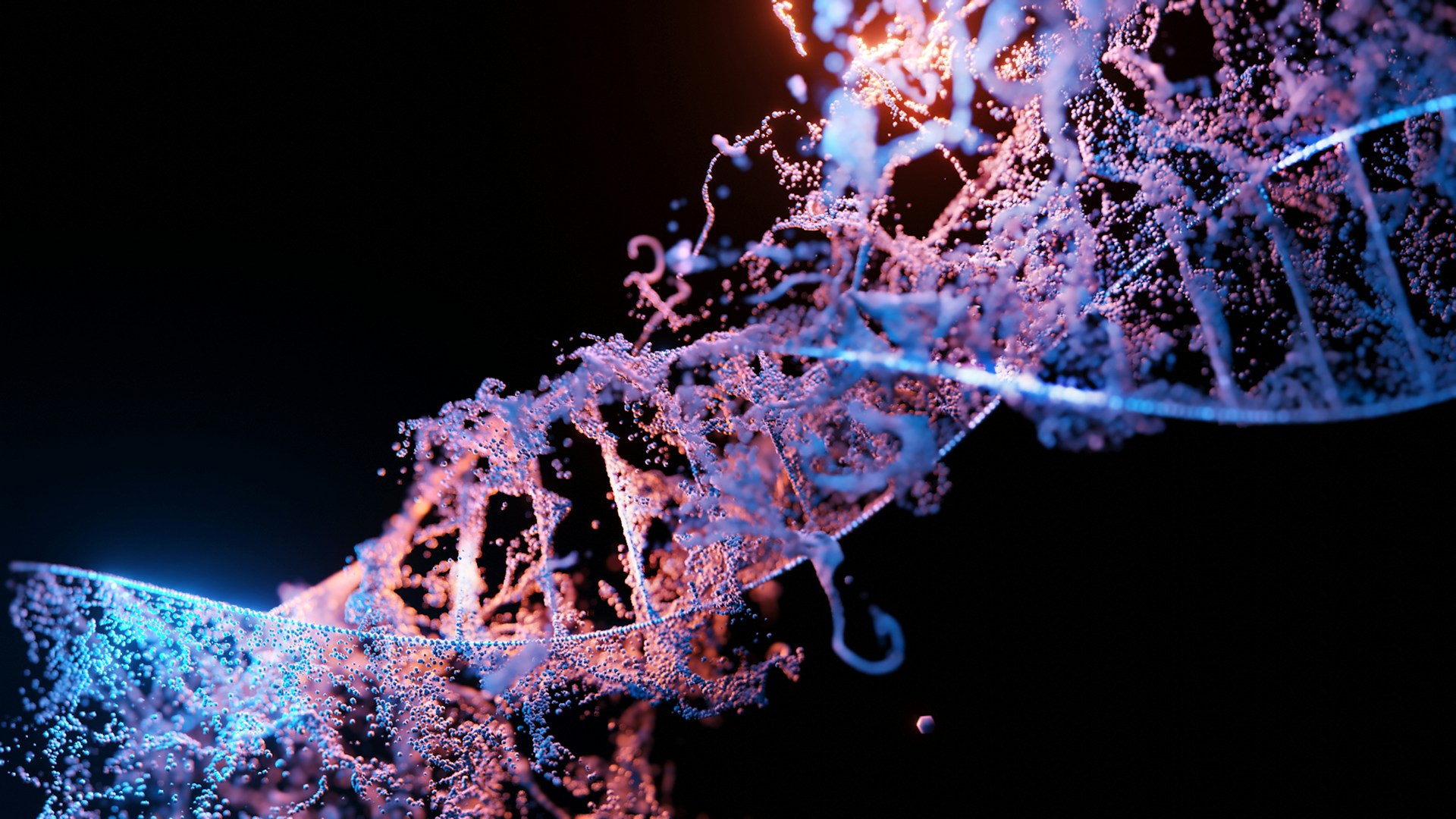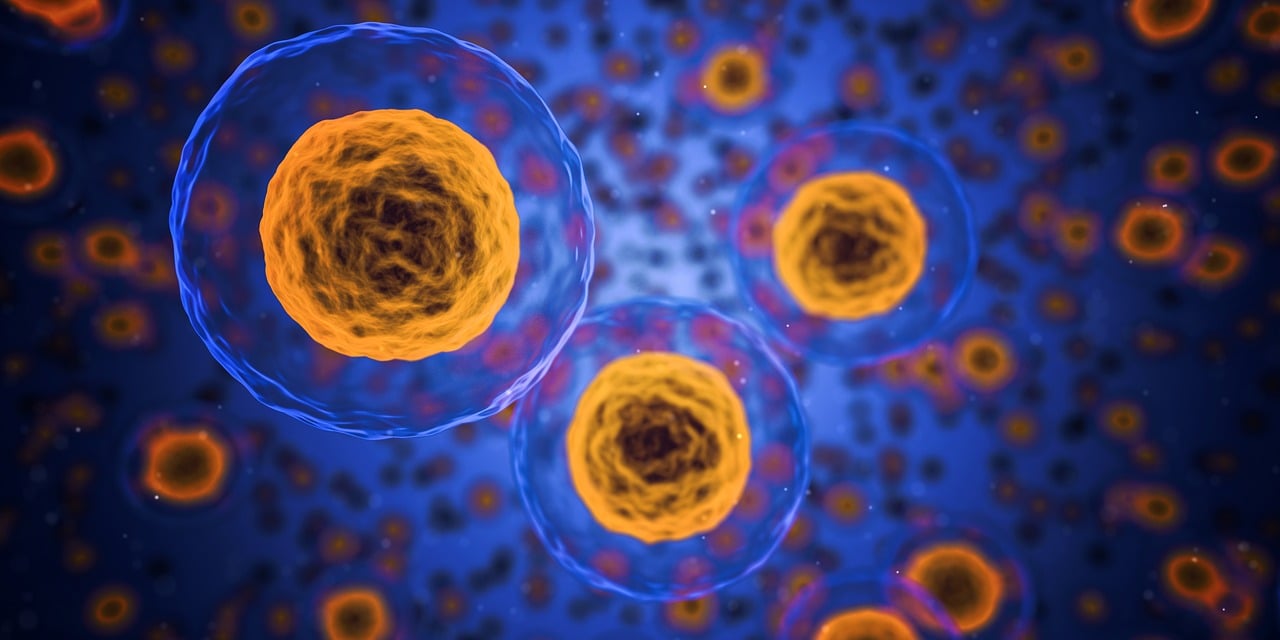
Researchers at the University of Minnesota have developed a synthetic cell – which they consider a prototype for a developing field – that could have interesting applications in the future. Photo credit: Arek Socha via Pixabay.
Nobel Prize-winning physicist Richard Feynman once said ‘What I cannot create, I do not understand’. For decades, biologists have sought to understand the rules of life by creating a non-living system that mimics the structure, function, and behaviour of a biological cell: such a system is known as a synthetic cell. This year, Associate Professors Kataryzyna Adamala and Aaron Engelhart at the University of Minnesota published a preprint reporting the first synthetic cell made entirely from non-living reagents, called Spud (SpudCell).
Spud has been shown to undergo multiple full cell cycles, carrying out complex processes such as DNA replication, cell growth, nutrient uptake, cell division, and even selection for advantageous mutations that promote survival. Nevertheless, Spud’s engineers still do not classify it as alive, as it lacks the self-sufficiency and adaptability of biological cells. For example, researchers have to supply the Spud cells with ribosomes, the machinery to make proteins, which natural cells can produce themselves. Additionally, only 30% of cells generated during cell division inherit the full genome, as Spud cells lack essential machinery required for separating duplicated DNA during division. Instead, its creators view Spud, like its namesake Sputnik, as a pioneering prototype for a rapidly developing field.
Spud has been shown to undergo multiple full cell cycles, carrying out complex processes such as DNA replication, cell growth, nutrient uptake, cell division, and even selection for advantageous mutations that promote survival.
Previous efforts to engineer synthetic cells have focused on a top-down approach, in which cellular functions are stripped back one by one to determine which are essential for life. Researchers at the J. Craig Venter Institute (JCVI) and Synthetic Genomics, Inc. (SGI)pioneered the “minimal cell”, in which all the DNA from simple microorganisms was replaced with artificial genomes containing progressively fewer genes. This is like stripping a car of its non-essential components, such as air conditioning and seats, to identify the parts required for it to move.
Previous efforts to engineer synthetic cells have focused on a top-down approach, in which cellular functions are stripped back one by one to determine which are essential for life.
The next step is to return the genes or pathways that facilitate a desired function back into the system, for example ones involved in synthesising a hormone or breaking down a material. In the car analogy, this could mean adding features to make it faster, such as a lowered suspension or an aerodynamic shell. These additions can improve the car’s speed, but it is still ultimately limited by its core components: the engine and tyres. Biological systems are similarly constrained by their underlying molecular toolkits: the 20 amino acids and four nucleotide bases that form the building blocks of life. Consequently, biosynthesis using genetically modified microorganisms remains constrained by the molecular machinery of living cells, although it can produce a wide range of products, including hormones (e.g. insulin), antibiotics (e.g. penicillin), and nucleotides (e.g. mRNA vaccines).
The goal is to replace harsh, inefficient chemical synthesis with a more sustainable biological alternative.
Differently, Spud was engineered using a bottom-up approach, combining prior work which focused on artificially replicating individual cellular pathways, to then create a complete cell. In the car analogy, this is equivalent to building a car from scratch. In future work, this method could allow researchers to expand the range of chemistry possible within the cell by incorporating hundreds of known amino acids, encoding new enzymes, and broadening the range of compatible starting materials. The goal is to replace harsh, inefficient chemical synthesis with a more sustainable biological alternative. The potential applications are diverse, such as artificial immune cells for biomedicine or modified plant cells for carbon capture.
Perhaps in the not-too-distant future, we could even grow everyday products at home, resulting in us trading shampoo starters as readily as we swap sourdough cultures today.
By building synthetic cells, researchers hope not only to better understand life itself but also to improve life as we know it. Spud marks a significant milestone in that journey and brings us one step closer to understanding life by creating it.
Edited by Lisa Tsoi, Eva Knightley and Maisie Pollard.