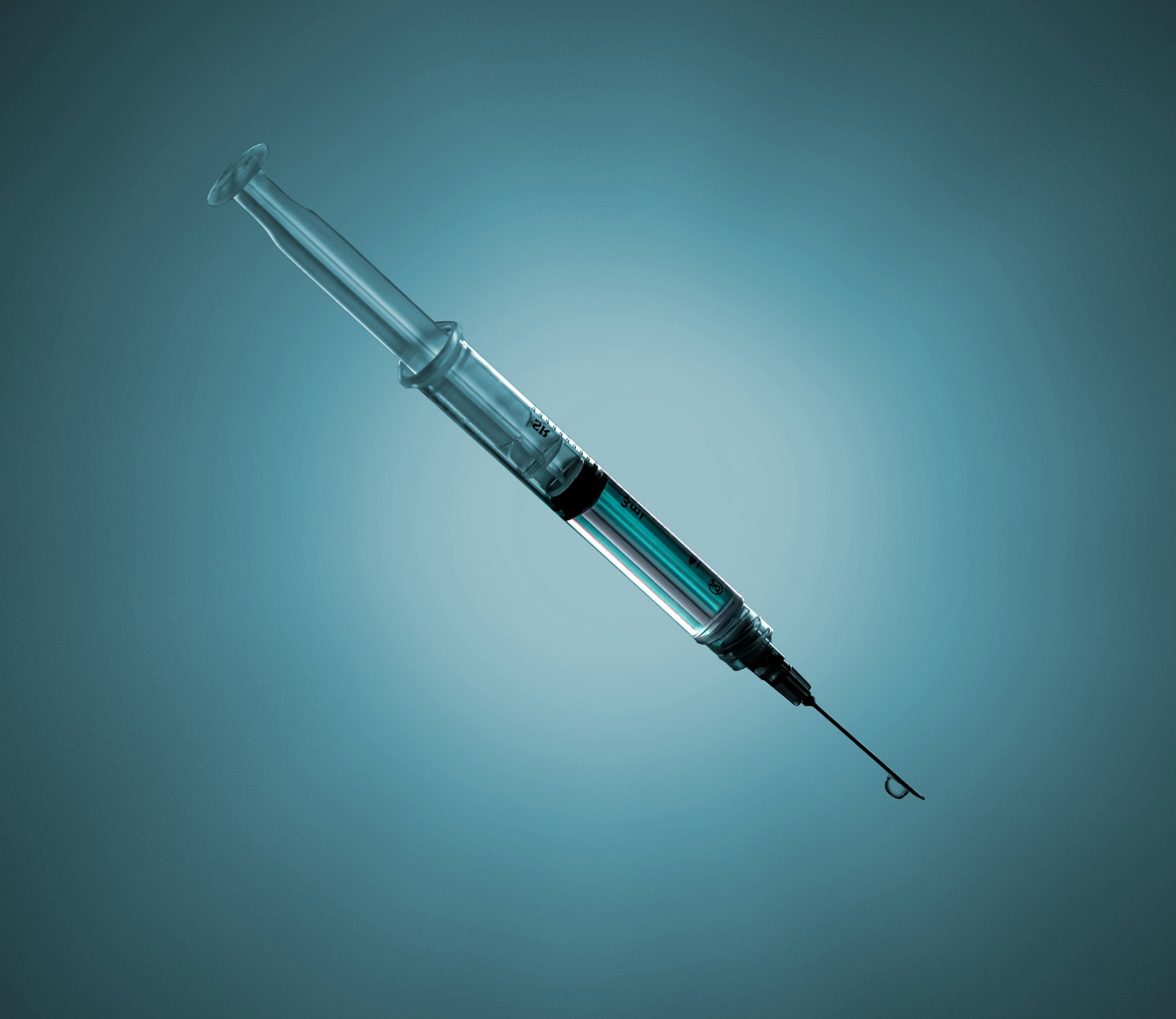
Despite pentobarbital being a potent depressant, Christa Pike survived two doses of it at her attempted execution. Photo credit: Ian Talmacs via Unsplash
‘Medically unprecedented’ is the term her attorneys used to describe Christa Pike’s survival from two lethal doses of pentobarbital. Used sparingly in a medical context since its discovery in 1930, and persisting through the barbiturate-riddled 1960s, pentobarbital has experienced a spike in modern usage for medical executions.
A far cry from its intended origins as a powerful short-term sedative and preanesthetic used as a sleeping aid, pentobarbital is the only drug used in lethal injections in over five states. With its use in euthanasia in Switzerland and as a part of the underground ‘suicide tourism’ industry in Mexico, it is clearly effective in its role as a death-dealing drug. The curious amongst you might ask: How exactly does it work? And what went wrong with Pike’s execution?
Barbiturates step on the brakes while letting go of the accelerator completely.
Pentobarbital belongs to a family of drugs known as barbiturates, generally described as ‘brain-slowers’. These drugs work by increasing the frequency and intensity of calming brain signals and decreasing stimulating ones, thereby depressing the central nervous system. These brain signals rely on neurotransmitters (small molecules that activate cells in the brain) called GABA and glutamate, respectively. The simplest analogy to use is that of a car: GABA acts like the brake pedal for your brain, with glutamate as the accelerator. Barbiturates step on the brakes while letting go of the accelerator completely.
Pentobarbital, however, is special due to what exactly it does to GABA receptors at high concentration. Most barbiturates simply allow GABA molecules to enter receptors quicker, but pentobarbital can directly activate receptors without GABA. It can be described as a ‘positive modulator’: it binds to a distinct site on the receptor and causes its channel to be open for longer, increasing the duration of response. The specific response of this receptor results in the influx of chloride ions, which, at high concentration, decrease the ability to pass these brain signals onto the next neuron, resulting in the ‘brain-slowing’ effect. This makes pentobarbital dangerous at high doses, with the body shutting down breathing and heart functions. It is this property that makes it suitable for execution or euthanasia, with just two grams being considered a deadly dose. Pentobarbital was abused for its powerful drowsiness effects since its discovery in 1930, being labelled ‘yellow jacket’ on the streets. Popularly marketed as Nembutal, pentobarbital stopped being commercially made in the US in 1999, with its incorporation in lethal injections starting from the mid-2000s.
This makes pentobarbital dangerous at high doses, with the body shutting down breathing and heart functions. It is this property that makes it suitable for execution or euthanasia, with just two grams being considered a deadly dose.
In Christa Pike’s case, the mechanism of action was far from straightforward. Pike had thrombocytosis, a condition where platelet levels are abnormally high, increasing the likelihood of platelet aggregation and blood clot formation. Considering her increased risk of clotting, administration through an intravenous (IV) cannula, which delivers drugs directly into veins, would have caused complications. Seven needles had to be used, with the cannula insertion procedure taking over an hour, rather than the standard few minutes. Four minutes after the drug was fed into the line, she complained about pain, stating ‘the vein in my arm feels like it’s about to bust’. This could have been a potential sign that clotting was happening, preventing the drug from circulating her body. Half an hour later, Pike was still alive, and Tennessee state protocol permitted the administration of a second dose. When her attorney noticed her still breathing, she was (eventually) taken to hospital where medical care was given. Five days later, she was expected to be brain-dead, but on the sixth day post-execution she awoke. Struck with pneumonia, Pike was unable to swallow and had a huge blood clot in her arm. While this might seem like a sign the execution was doomed due to her physiology, the medical team at the prison are also potentially to blame.
This could have been a potential sign that clotting was happening, preventing the drug from circulating her body.
Dr Mark Walton Fowler was responsible for both Pike’s and for the other failed execution this year. In the case of Tony Carruthers, the inmate was given a one-year reprieve after the medical team punctured his arm more than a dozen times to insert an IV cannula. It might be surprising to some that a man who admitted to not having placed a central IV line since he stopped working as an emergency doctor in 2013 was allowed to perform an execution, and the American Medical Association’s code of ethics says that physicians ‘must not participate in a legally authorized execution’, explicitly stating ‘starting intravenous lines as a port for a lethal injection device’. States are often unable to get doctors to break their own ethical code, so must ‘scrape the bottom of the barrel [by] hiring individuals with inadequate training and minimal conscience’, according to Amy Harwell, Carruthers’ public defender.
It might be surprising to some that a man who admitted to not having placed a central IV line since he stopped working as an emergency doctor in 2013 was allowed to perform an execution
To conclude, the overarching question is simple: What caused this unprecedented outcome? Was it purely the incompetence and negligence of the doctor? Or was it a medical oversight due to her clotting disorder? Either way, the case of Christa Pike is of huge interest to both constitutional lawyers and medical professionals, both united with the goal of preventing this happening again.
Edited by Veronika Ilinčeva and Eleanor Shuttleworth