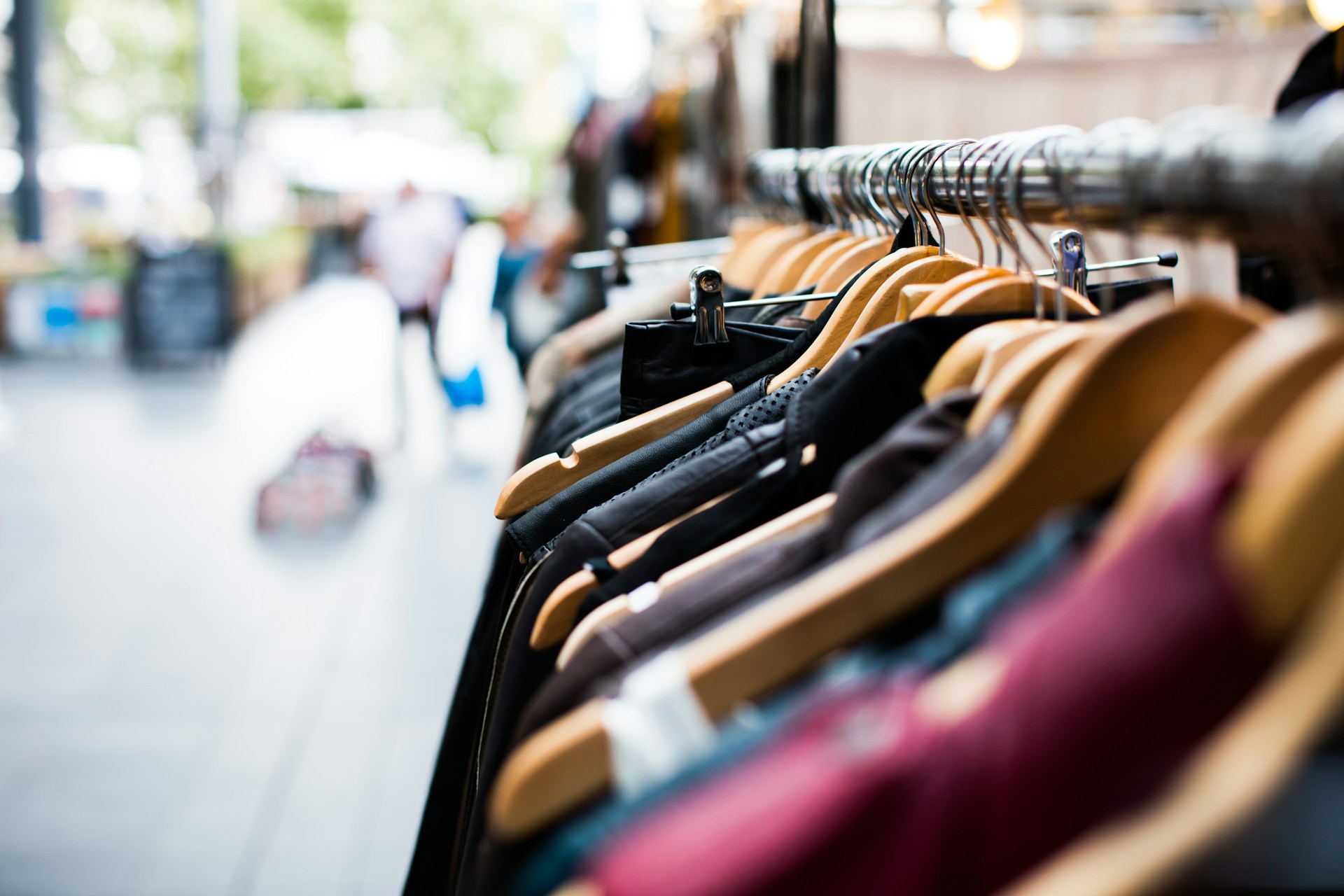
The clothes we wear may be exposing us to an invisible and dangerous source of pollution. Photo by Artificial Photography on Unsplash.
One wear at a time, microplastics from clothing are entering our bodies and the environment, but fashion companies aren’t interested in talking about it.
What are microplastics, and how are they related to fashion?
Synthetic fabrics are made from chemically produced fibres instead of natural ones such as cotton or wool. They are typically polymers, which are large molecules formed of chains of repeating units, held together by ester linkages. Polymers break down into smaller fibres and can shed fragments off. These are called microplastics when they are less than 5mm in length.
Synthetic fibres are adored by fashion companies, with polyester overtaking cotton to become the most used fibre in clothing in 2002. It now makes up around 52% of fibres used for clothing today, with all synthetic fibres making up 70%. There are several reasons for their appeal, such as their versatility and strength. Some brands argue that synthetic fibres are necessary for desirable qualities in sportswear and swimwear, such as being hydrophobic (water repelling), stretchy, and fast drying. But more generally, brands arguably love synthetic fibres for their low costs; for example, polyester is around 30-40% cheaper than cotton. For ultra-fast-fashion brands like Shein, who produce around 10,000 new products a day, this price difference can mean huge savings.
Whilst available data is limited…the presence of microplastics in the human body has been linked to various health issues, from asthma to cancer and dementia.
Microplastics can be found throughout the environment and our bodies. Although the fashion industry is not the sole contributor to this ubiquity, it is largely responsible. For example, 35% of microplastics in the ocean come from clothing. Whilst available data is limited, and the risks haven’t been decisively demonstrated, the presence of microplastics in the human body has been linked to various health issues, from asthma to cancer and dementia. These risks aren’t going anywhere – the amount of (predominantly synthetic) clothing being produced is only increasing each year.
How do synthetic fibres enter the environment, and our bodies?
Once they’ve [microplastics] entered the water cycle, they can essentially go anywhere.
The ubiquity of microplastics in the environment is clear – studies have detected polyester microplastics in snow on the top of Mount Everest to deep down in the Mariana Trench. One of the main ways that microplastics enter our environment is through our clothing being washed, which causes microplastics to fragment off and enter the wastewater of the machine. Since microplastics are so small, they can pass through the filtration system and enter the rivers and oceans. Once they’ve entered the water cycle, they can essentially go anywhere. Part of the water cycle is water evaporating, condensing into clouds, and coming back down as rain. This has led to microplastics from polyester being found in rain samples across the world. Additionally, just from wearing clothing, microplastics can fragment off and enter the air. A 2011 study found microplastics from synthetic fibres (around 19% of which were from polyester) in all 8 samples of London air they collected.
An overwhelming presence in the environment isn’t all—microplastics have been found in several parts of the human body, across a range of studies. There are several ways that we intake microplastics. One is through direct ingestion, which is a particular issue for babies and young children, as they crawl on the floor and have frequent hand-mouth contact. Since microplastics collect on floors, these behaviours mean that babies ingest a significant amount of microplastics. This link is reinforced by studies showing that frequent vacuuming of the home can lead to less microplastics found in children. Studies have found microplastics in human stool, showing that they can (and do) get ingested and pass through our bodies.
Another way that microplastics enter our bodies is through inhalation. Studies have found that more microplastics are inhaled indoors than out, and that the composition of microplastics varies across different environments. This is significant, considering that the average person spends about 90% of their time indoors (a low estimate for STEM students in Trinity term). A 2022 study found and photographed microplastics in human lung tissue. They have also been found in human placentas, meaning they could reach a developing foetus.
Fashion and our health—the hidden threats of microplastics
So, what do microplastics in the body mean for our health? Well, the research is ongoing—but it doesn’t look good.
…existing research does indicate that microplastics could cause serious harm.
The presence of microplastics has been linked to various health issues in many parts of the body. Current conclusions about just how dangerous microplastics are to our health are limited by the small amount of research which has been conducted. However, existing research does indicate that microplastics could cause serious harm. For example, they have been found to potentially limit the growth of bone and muscle cells. Other scientists discovered microplastics in bone and skeletal muscle of patients following joint replacement surgery. The researchers argued that this may limit a patient’s ability to exercise.
Microplastics also cause chronic inflammation. In samples of human lungs, microplastics may be penetrating tissue, causing macrophages (a type of white blood cell that attacks germs) to engulf them. Macrophages can break down ordinary germs, but not microplastics. This repeated failure to break them down can lead to chronic inflammation, which is linked to various health issues, such as cancer, heart disease, diabetes, and asthma. Microplastics have also been found to decrease the success rate for patients of cancer treatments. This may be due to microplastics binding to drug molecules, and preventing them from reaching tumours. Several studies have also linked microplastics to rising infertility levels in both men and women. Additionally, patients who were diagnosed with dementia before their passing had ten times more plastic in their brains than others.
Given that air pollution is a significant factor in the severity of asthma cases, the high presence of microplastics in the air means that researchers are interested in testing how microplastics compare to other pollutants on our health. Studies on the lungs of workers in textiles showed interstitial fibrosis (scarring of the lung) and immune responses to several synthetic fibres, such as nylon, polyester, and acrylic. The studies also suggested that, when fibres cannot be cleared from the lungs, this may trigger chronic inflammation.
How can we avoid microplastics in fashion?
Although these studies do not guarantee that microplastics are harmful to us, they strongly suggest that this is the case. More decisive conclusions are limited by the lack of available data—the effect of microplastics in some areas of the body have not been tested yet.
Ideally, we’d stop this flood by turning off the tap, which would entail getting fashion companies to stop mass-producing synthetic clothing, a large proportion of which does not get worn. However, as long as companies continue to grow profits by swapping natural fibres for cheaper synthetic ones, these textiles will remain ubiquitous.
Instead of relying on brands to change, your best bet is to be a hard-to-impress shopper, reading labels of the composition of your clothing. This can feel investigative at times, since brands are catching onto our fear of synthetic fibres. If the public conception of a material is too negative, they might instead use other similar synthetic fabrics that you haven’t heard of. Remember, a high price doesn’t always give you information about the quality of the product itself.
Shopping second-hand is also a great way to get higher quality pieces…and can also help you to curate your personal style, rather than simply following every trend.
Shopping second-hand is also a great way to get higher quality pieces. Some sturdy clothing, like denim jeans, was generally designed for longer use in the past, so buying older or vintage clothing may get you more wear, comfort, and style than a brand-new synthetic piece. Even better than constantly shopping for a new wardrobe, rewearing your favourite non-synthetic items is the best way to ensure you save on health risks, and money. This can also help you to curate your personal style, rather than simply following every trend.
The next years of research will provide us with more knowledge on the relationship between fashion and our health. But for now, it’s probably best to stick to the basics, and rewear your non-synthetic clothing as much as you can.
Edited by Mia Clark-Webb, Sebastian Evans, and Phoebe Bedford.