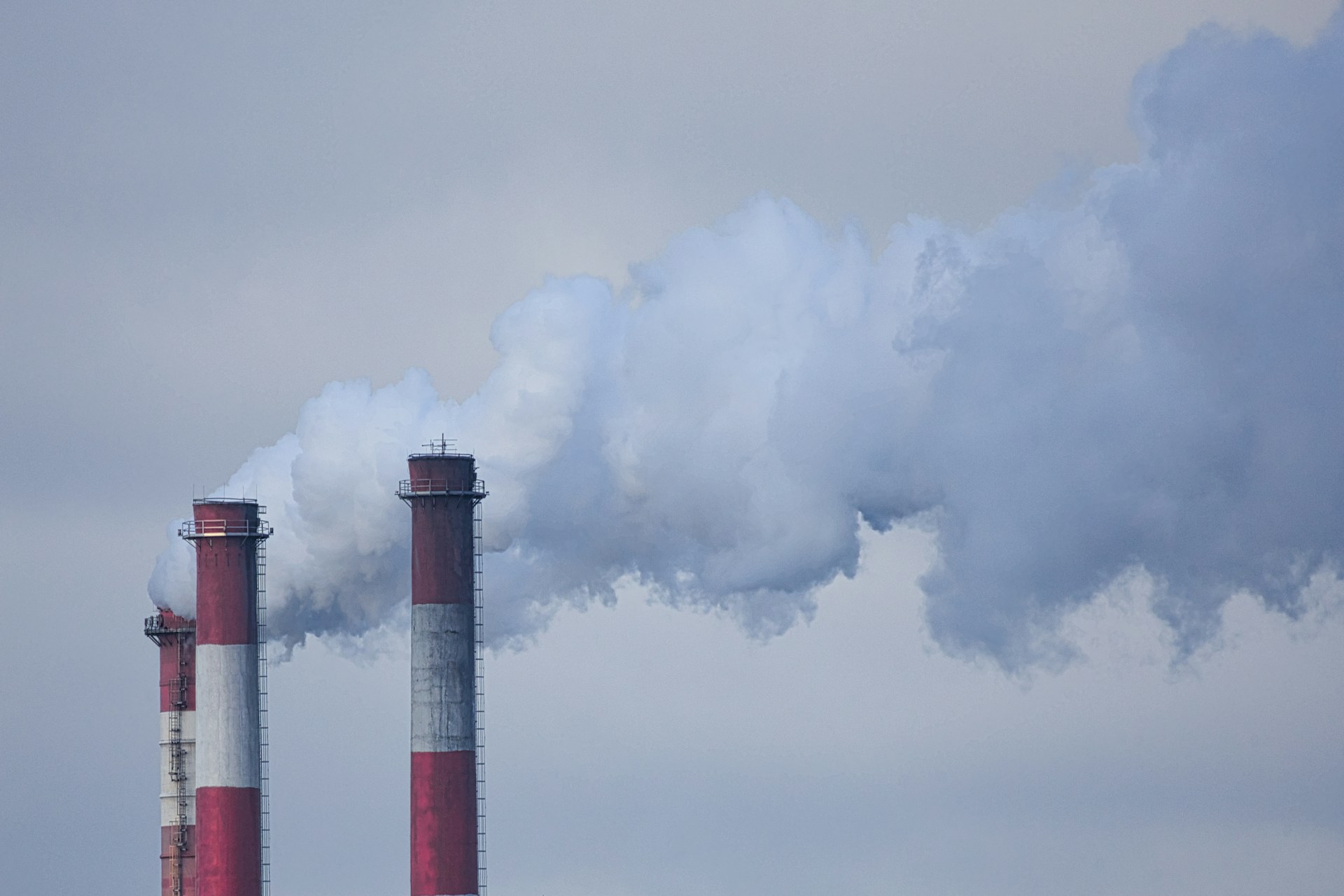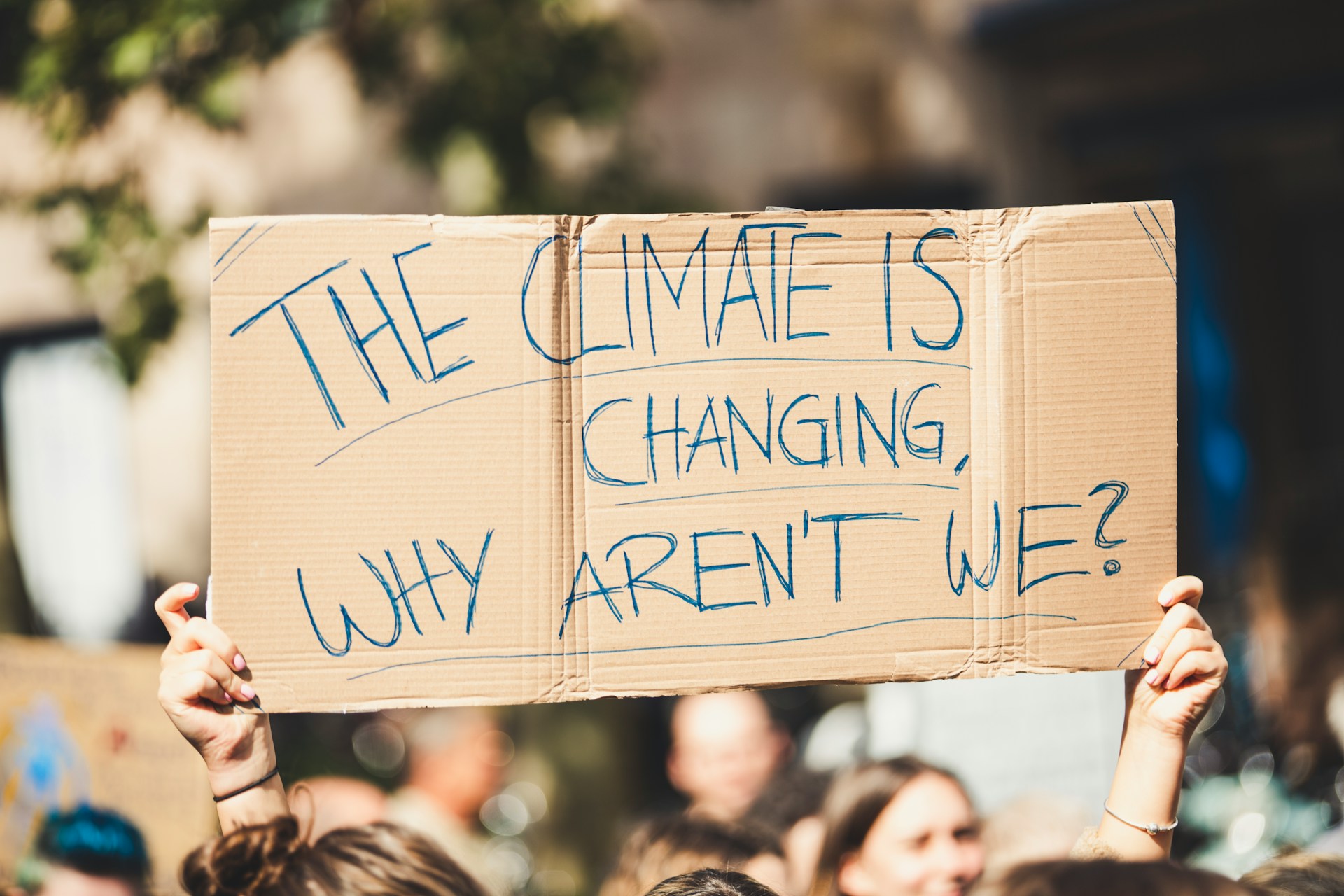
As climate anxiety grows among young people, the challenge may be turning fear into action rather than despair. Photo credit: Markus Spiske via Unsplash.
It seems like there are more reasons than ever for young people to be experiencing “eco-anxiety”.
Bad news travels fast: media coverage from COP30 was overwhelmingly negative, and critics pointed to the lack of progress in eliminating fossil fuels, negotiations disrupted by fires, and delayed deadlines for adaptation finance. In popular culture, these moments are often framed as signals that the climate crisis is spiraling out of control, leaving many young people feeling a mix of dread about the future, frustration at political inaction, and a sense of powerlessness. It seems like there are more reasons than ever for young people to be experiencing “eco-anxiety”.
‘You can get loaded down with a lot of negative information about climate change,’ says Amelia Ross, a finalist at Merton. The term “eco-anxiety”,first coined by Australian philosopher Glenn Albrecht, refers to emerging mental health problems induced specifically by the climate crisis and environmental degradation, rather than natural or seasonal environmental change. Britain may seem far removed from the most visible impacts of today’s climate crisis, but the psychological effects can still take a toll. Young people are most susceptible to the emerging economic uncertainties caused by the pressure to transition economies away from carbon-intensive industries.
From a young age, many people now grow up immersed in constant climate news. Social media platforms such as TikTok provide unfiltered footage from regions experiencing extreme weather events, making distant crises feel immediate and personal. This constant exposure shapes how young people understand both the scale and urgency of climate change.
That anxiety has not gone unnoticed. The idea that young people are suffering from “eco-anxiety” has become a recurring theme in media discussions on climate change. Three years ago, the New Statesman explored how climate anxiety can strain personal relationships, arguing that constant exposure to climate news can foster guilt, moral pressure, and conflict between friends with different levels of concern or engagement. Lifestyle and fashion media have also taken up the issue: Vogue has interviewed models such as Bella Hadid, who has spoken the difficulty of reconciling personal lifestyle choices with environmental values.
“Eco-anxiety” has become part of the growing vocabulary used to describe emotional responses to the climate crisis: “eco-grief”, a sense of resignation about both existing and future environmental damage; “eco-guilt”, a feeling of personal responsibility for collective environmental problems; and “flight shame”, discomfort with the carbon impact of air travel. Rather than one unifying experience, the variety of terms reflects the variety of emotional responses to climate change.
A study by the British Science Association pointed to gaps in climate education as a source of eco-anxiety. Teaching typically focuses on existing and future harms, while less attention is paid to potential solutions and mitigation efforts already underway. As a result, many young people are pessimistic about climate change because they feel excluded from conversations about how rapidly the UK has adapted in recent years to limit impacts and transition towards renewable energy.
This progress cannot improve young people’s anxiety about climate change if they remain unaware of the ongoing changes around them.
In 2024, renewables accounted for 74% of Britain’s energy mix, the highest proportion on record. Offshore wind in particular has expanded rapidly, transforming electricity generation nationwide. This progress cannot improve young people’s anxiety about climate change if they remain unaware of the ongoing changes around them. Young people remain staring at a picture of the climate crisis which is bleaker than the data indicates. Eco-anxiety may be persisting because young people are struggling to see how their own actions and future careers connect to national changes.
In a University of Bath study of over 10,000 young people, almost 60% reported being “very” or “extremely worried” about climate change. This anxiety does not exist in isolation. It sits alongside broader pressures facing young people, including an uncertain job market, rising student debt, and anxiety about how artificial intelligence will reshape future employment. Together, economic, technological, and ecological uncertainties are compounding feelings of pessimism about the future. But greater awareness of the UK’s efforts to change this trajectory could offer some reassurance.
‘I think eco-anxiety is just generalised life anxiety,’ says Milton Lee, a 3rd-year studying Physics at Somerville. ‘I think eco-anxiety is worsened by the fact that, for a lot of young people in the UK, the general sentiment just seems to be pessimism.’ It is a telling observation: when anxiety about climate sits alongside anxiety about jobs, debt, and technology, it becomes difficult to separate one fear from another, and harder still to find room for hope.
Yet the data tells a more hopeful story. In 2024, the UK eliminated coal-generated electricity from its energy mix. ‘It’s positive to know that the country has shifted more towards renewables,’ says William Revill, a 3rd-year studying Geography at St. Peter’s. ‘I’ve seen that materially, and in my studies as well.’ The government’s carbon budgets are currently being met, placing the UK on track for net zero by 2050. Yet even as decarbonisation proceeds broadly according to plan, many young people remain anxious about their futures.
Expanding access to well-paid, high-skilled roles in renewable energy, climate modelling, green finance, and environmental policy could help resolve this tension and reduce eco-anxiety.
In a competitive job market, students often feel forced to choose between higher-paying roles with unclear environmental impact and lower-paid work explicitly focused on sustainability. Expanding access to well-paid, high-skilled roles in renewable energy, climate modelling, green finance, and environmental policy could help resolve this tension and reduce eco-anxiety.
Moli Birkinshaw, a 3rd-year studying E&M at Merton, agrees. ‘I think there’s a sense of helplessness in terms of ability to make a difference,’ she says. ‘I hear people say you can go into research and not make any money, but make a difference, or go into a high paying job. And I just think that’s very much not the reality.’ Clearer pathways into climate-related careers, alongside better information about them, could help young people see these options as realistic rather than exclusive.
Yet that very sense of helplessness may contain the seeds of something more constructive. Rather than dismissing eco-anxiety as something to be overcome individually, it may be more productive to recognise it as a rational response to uncertainty, which can motivate engagement when reframed with opportunities for action.
‘I’m a lot more conscious now that what job I do, I don’t want it to cause harm,’ says Birkinshaw. In 2024, Deloitte reported that two in ten Gen Zs have already changed jobs or industries due to environmental concerns, with another quarter planning to do so.Marc Giroux, a 4th-year studying Physics at Merton hoping to pursue fusion energy research, agrees: ‘What we devote our life to has the opportunity to make a big difference.’ While previous generations may not have factored climate commitments into career decisions, this generation increasingly does.
This shift has contributed to the idea of “climate-quitting”, where graduates reject employers with weak environmental commitments. According to KPMG, one-third of young people in the UK have turned down jobs due to inadequate environmental, social, and governance (ESG) credentials. For graduates, choosing work that contributes to climate mitigation can provide a sense of control and purpose, even within a complex policy landscape.
‘Achieving net zero comes down to government policy,’ says Ross. ‘That’s why I’d say I have eco-anxiety, because that’s not something I feel is in my control.’ Requiring all employers to disclose climate commitments, not currently mandated by the UK government, could allow young jobseekers to make more informed choices. Purpose-led careers already exist in areas such as renewable energy engineering, environmental data analysis, sustainable finance, and climate policy. Making access to these roles broader and more transparent could help reframe eco-anxiety from helplessness into action.
The challenge is not to silence that anxiety, but to give it somewhere to go.
Eco-anxiety, at its core, is evidence that young people are paying attention to global events. The challenge is not to silence that anxiety, but to give it somewhere to go. With the UK’s energy transition accelerating, green careers expanding, and an entire generation primed to make climate action a condition of how they live and work, the foundations for genuine optimism are already present. The task now is making sure young people can envision themselves in that future.
Some ideas expressed in this article are opinion, and may not represent the opinion of The Oxford Scientist as a whole.
Edited by Lisa Tsoi, Leah Belson and Sophie Lyne.