

Doritos dye helps scientists make mice transparent—humans might be next!
Sinibaldo Romero Arocha reports on a new study published in Science showing that the dye in doritos can turn mice transparent.
Sinibaldo Romero Arocha reports on a new study published in Science showing that the dye in doritos can turn mice transparent.

Julia Chung, the year 10-11 category winner of the Schools Science Competition reflects on predator-prey coevolution.

Year 12-13 winner of the Schools Science Competition, Jaden Lim, reflects on how domestication has been pivotal to the path of evolution.

Overall Schools Science Competition winner, Arushi Vasanad, explores the evolution of humans’ most powerful organ.

Ramón Nartallo-Kaluarachchi reflects on advancements in the computational sciences, such as the development of AI, and potential pitfalls.

Katherine Faulkner reflects on how studies of the past can inform the future of conservation amidst the climate crisis.

Natalie Stevenson reports on a new study by Sweetman et al which suggests that polymetallic nodules under the ocean can produce oxygen

Olivia Allen reports on an exciting new sunlight trapping device using the simple quartz stone, which may reduce the need for fossil fuels.

Divya Ganesh reports on a newly discovered dinosaur and refutes claims stating the Lokiceratops simply shows within-species variation.
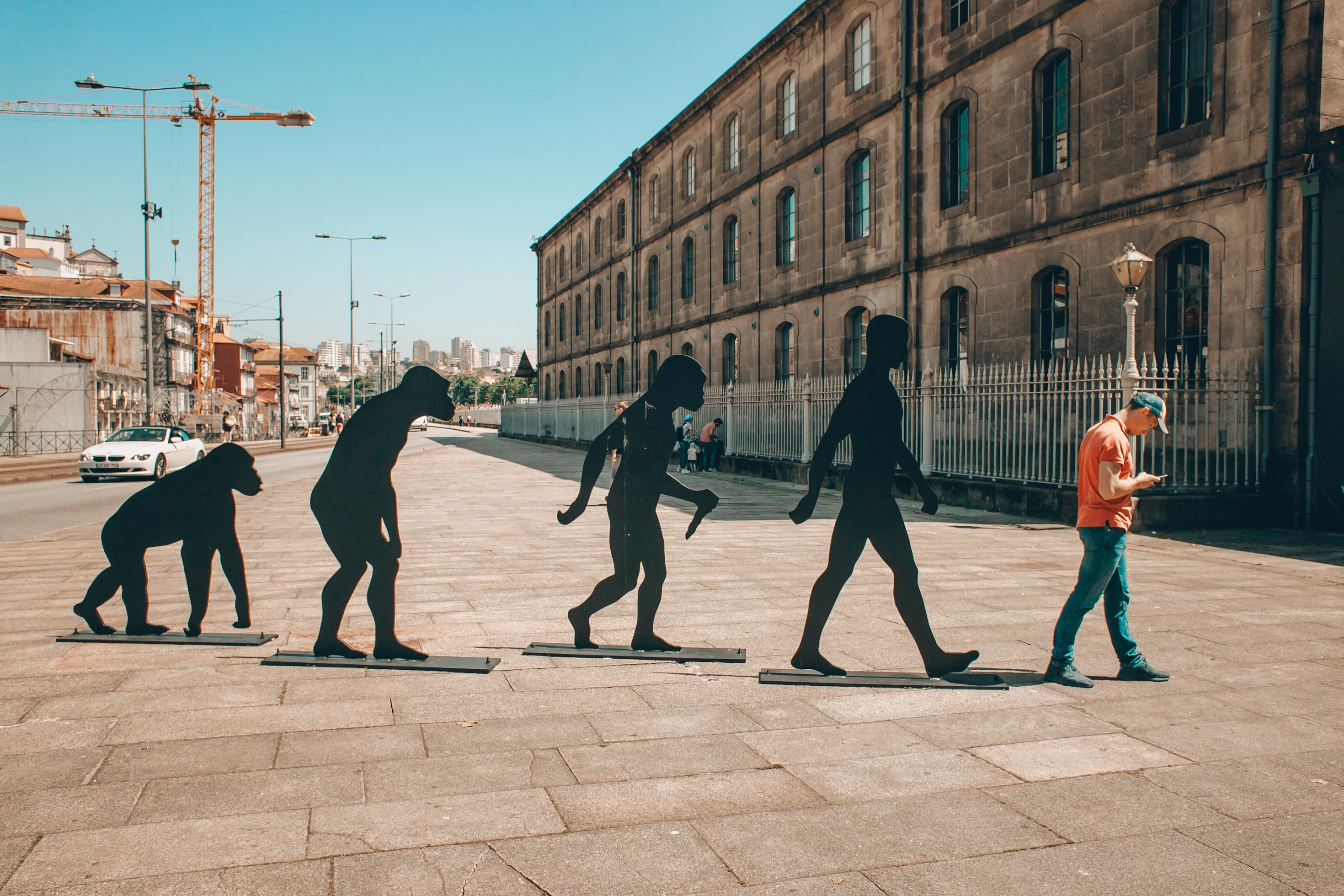
Olivia McGinnis discusses a recent study highlighting the relevance of genetic transposons in the evolution of tail loss.
