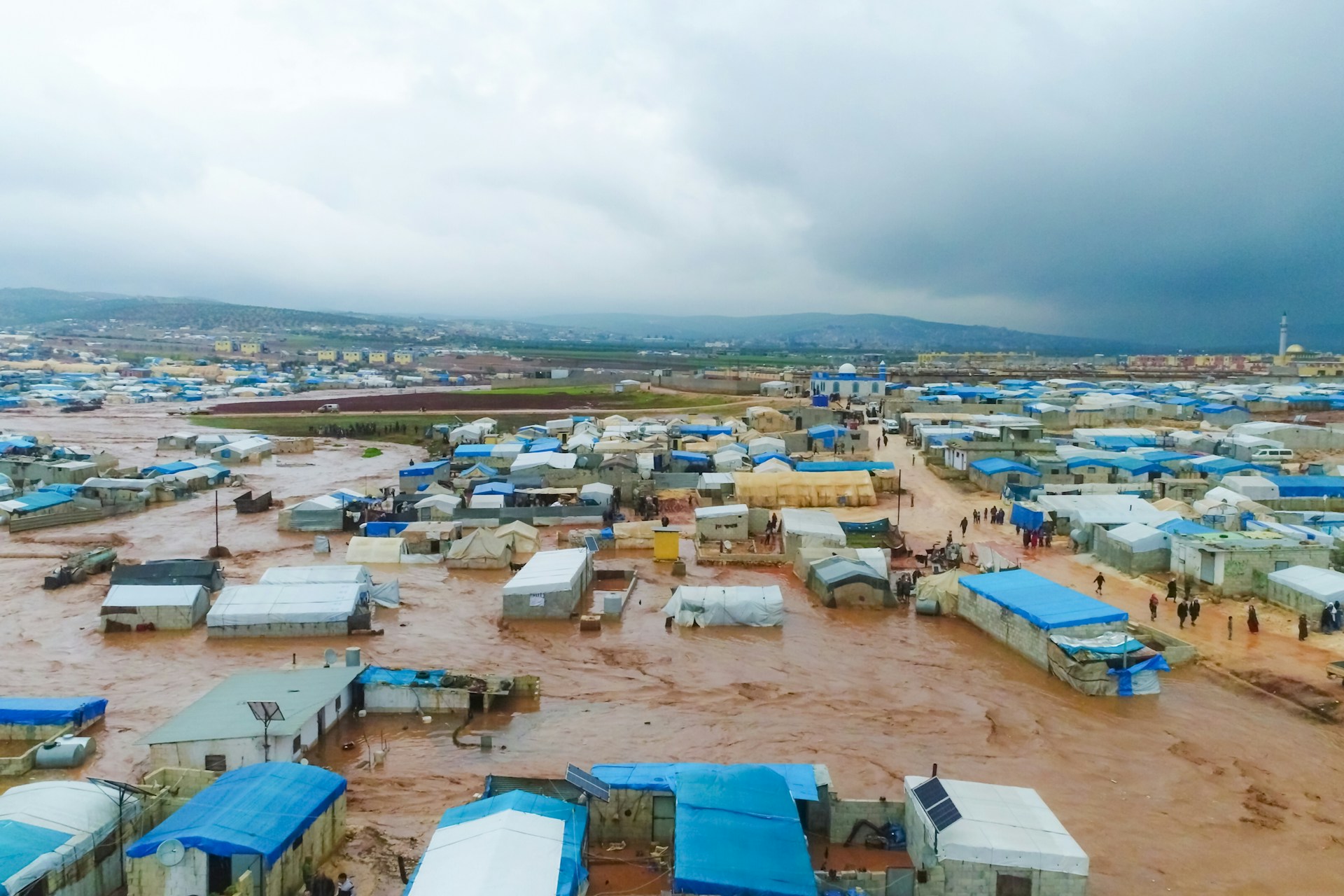
Global science is shaped as much by power and history as by discovery, raising urgent questions about who defines knowledge and whose voices are heard. Photo credit: Photo by NASA on Unsplash
Who lives, who dies, who cares?
Who lives, who dies, who cares? These are not just abstract questions, but the realities that define the direction of global science and ingenuity globally. Even as globalization collapses distance, and science permeates nearly every sphere of life, power remains firmly concentrated in the Global North. This, in turn, delineates a narrowly defined research and scientific agenda, rooted in a historical narrative that positions scientific discovery and innovation as the sole inheritance of Europe and the Western world. The “white-washed” revision of history, where science is constructed as a uniquely European ideal, produces a global scientific system that questions both the quality and trustworthiness of scientific knowledge if produced elsewhere. This is why researchers at top universities should no longer claim neutrality or ignorance—there can be no Switzerland in a world built unevenly. The system does not need to be burned down, but it does need to be reckoned with, repaired, and redesigned.
Science has always advanced through moments of global encounter, through shared observations of astronomical trends and mathematical theories, borrowed methods of medical diagnostics and treatment, and translated texts, but the 1990s marked the moment when these encounters crystallized into a system we now recognize as “global science”. Global science describes the worldwide networks of institutions, researchers, and infrastructures through which scientific knowledge is co-produced and shared, ideally through a shared language and with the shared goals of furthering scientific discovery and advancement. But, because modern science’s narrative has been co-opted by a historical goal to give credence to the West for its roots, questions of who holds epistemic power, and who determines what counts as valid knowledge and how it circulates, are inseparable from the rise of “global science”.
In 1990, we witnessed an intense diversification of science output, where science shifted for the first time from being organized through relatively independent natural science bodies and academies (think the UK Royal Society, where Isaac Newton, Charles Darwin, Albert Einstein, and Michael Faraday were all members) to being produced, governed, and legitimized by scientists housed within research universities. It is worth mentioning that the global science system is deeply grounded in autonomous self-management, governed by the norms of science, not the norms of a given nation-state or political body. But this autonomy is not truly neutral. It is precisely this claim to self-governance that has perpetuated this “white-washed” version of scientific history to persist, largely unchallenged. Science may operate independently of governments, but it does not operate independently of power; it is a complex ecosystem deeply entangled with funding, prestige, and institutional authority.
Science may operate independently of governments, but it does not operate independently of power; it is a complex ecosystem deeply entangled with funding, prestige, and institutional authority.
So, while science may be the field of hypotheses and new discovery, it is also a form of currency that is traded, invested in, and leveraged to advance policy agendas across various government structures. Global frameworks like the Sustainable Development Goals (SDGs), and priorities set by organizations such as the World Health Organization, shape what types of research get funded, which diseases become “global threats,” and which populations are deemed to be worth studying. Though SDGs are premised upon global collaboration and consideration, the Global North is the driver of this bus. The Global North’s countries and institutions get to dominate technical working groups, set indicators, and define what “progress” looks like, often without fully accounting for the political, economic, or cultural realities of the regions these goals are meant to serve. What emerges is a version of global science that travels well on paper, but far less well in practice.
Global science is a complicated web of power, geopolitics, and scientific superiority, masquerading in objectivity. We may preach for equity in global science, but the field continues to cement inequitable publication hierarchies and Western notions of metrics, protocols, and authorship guidelines that the Global South must adhere to. In the literature, there are four rather interesting narratives to explain the trajectory of global science as we know it: 1) science is a cross-border network, 2) science is an arms race between nations, 3) science is the currency within which a global market of “World-Class Universities” compete, and 4) science is permanently constrained by Euro-American dominance which sets forth all hierarchy and rules for adherence.
As an American researcher in global health, I have been fortunate enough to conduct the bulk of my clinical research at well-renowned and well-funded academic institutions in the US, and I see merit in all four of the narratives stated above. It is an arms race, it is constrained by Euro-American dominance, it is a currency, and it is cross-border. The issue is not that these forces exist, but that they are entirely misaligned. Global science is structurally skewed, allowing power and legitimacy to circulate more freely than equity. But fixing this imbalance requires more than symbolic gestures; it requires rethinking how scientific authority is produced and rewarded.
My research thus far has been previously funded by the NIH and my doctoral work is now funded by the UK government, and so my own scientific identity has been shaped almost entirely within Western frameworks. The way I was taught to design a study, assess rigor, structure authorship, and even define what counts as a meaningful, important, and valid scientific question has been dictated by institutions that sit at the center of global research power.
I’ve sat through hours of lectures and group discussions where we tear apart research methodology, weigh all the implications (social, moral, epistemic, scientific) and redesign approaches. These norms were always presented to me as universal, when in reality they reflect a very specific epistemology: one built by, for, and around the scientific cultures of the Global North. This unquestioned epistemic authority is only now being challenged by my work across borders, as I collaborate with teams in Uganda, Ukraine, and Cameroon, and it has led me to realize that much of “the way I do science” is not a neutral practice, but an inherited worldview.
Social medicine, global health, and international research do not exist outside history; they underpin centuries of oppression, colonialism, economic extraction, and the reproduction of Western dominance. The political and economic realities of these nations often labeled “Third World” did not occur in isolation, but rather as a consequence of a global order engineered to advantage a select few, and disadvantage others. Our current world is a physical manifestation of the social order history created and reinforced, time and time again. What we study (the world’s inequities, crises, and uneven distributions of health and wealth) is a living, breathing artifact of this. We see these legacies not only in global health outcomes, but in the data itself: in how data is shaped, collected, and valued.
Even though English is the first language for only 5% of the world, 92-95% of articles in WoS and Scopus are in English.
For example, bibliometric collections, such as Scopus and Web of Science (WoS), create tangible and material boundaries for what and which knowledge is worthy and inherently valuable. These sources and databases have never just been about the production and aggregation of scientific thought, but rather the very intentional selection of it. Even though English is the first language for only 5% of the world, 92-95% of articles in WoS and Scopus are in English. Scientific breakthroughs, of course, are not confined to a single language, but global science lacks any systematic way to ensure that non-English research, once translated, retains the nuance, context, and epistemic richness of its native tongue. While global science is often described as thriving through a shared language, language, much like autonomy, is not neutral: it actively concentrates epistemic power.
So, what can we do about this?
As a mixed-methods researcher, I have a penchant for reflexivity, and I think it’s a good place to start. Reflexivity asks us to look inwards: to identify, challenge, and consider our internal biases, identities, and frameworks. To interrogate our methodological tendencies and habits, to weigh what we have consciously and unconsciously absorbed from our modern world order. But I think if we are to view science as the field of inherent public good, then we ought to challenge ourselves as researchers—can we be reflexive about all the work that we do? Can we acknowledge cross-cultural collaborations, and perhaps even require positionality statements in both qualitative and quantitative work?
I believe we can. With it, we ought to reset global research priorities. We have let the silenced be silenced for far too long. It is time we value local-first research designs and grants, push for more region-specific funding inquiries, and rebalance research power.
Science is not ahistorical, and neither is that power.
The system does not need to go. But it does need to change. The failures and inequities of global science are not inevitable, they are choices. Those of us at top research institutions do not merely inherit credibility, we hoard it. Science is not ahistorical, and neither is that power. So, ask yourself this next time: who lives, who dies, who cares…and who gets to look away? The answer is starker than you think.