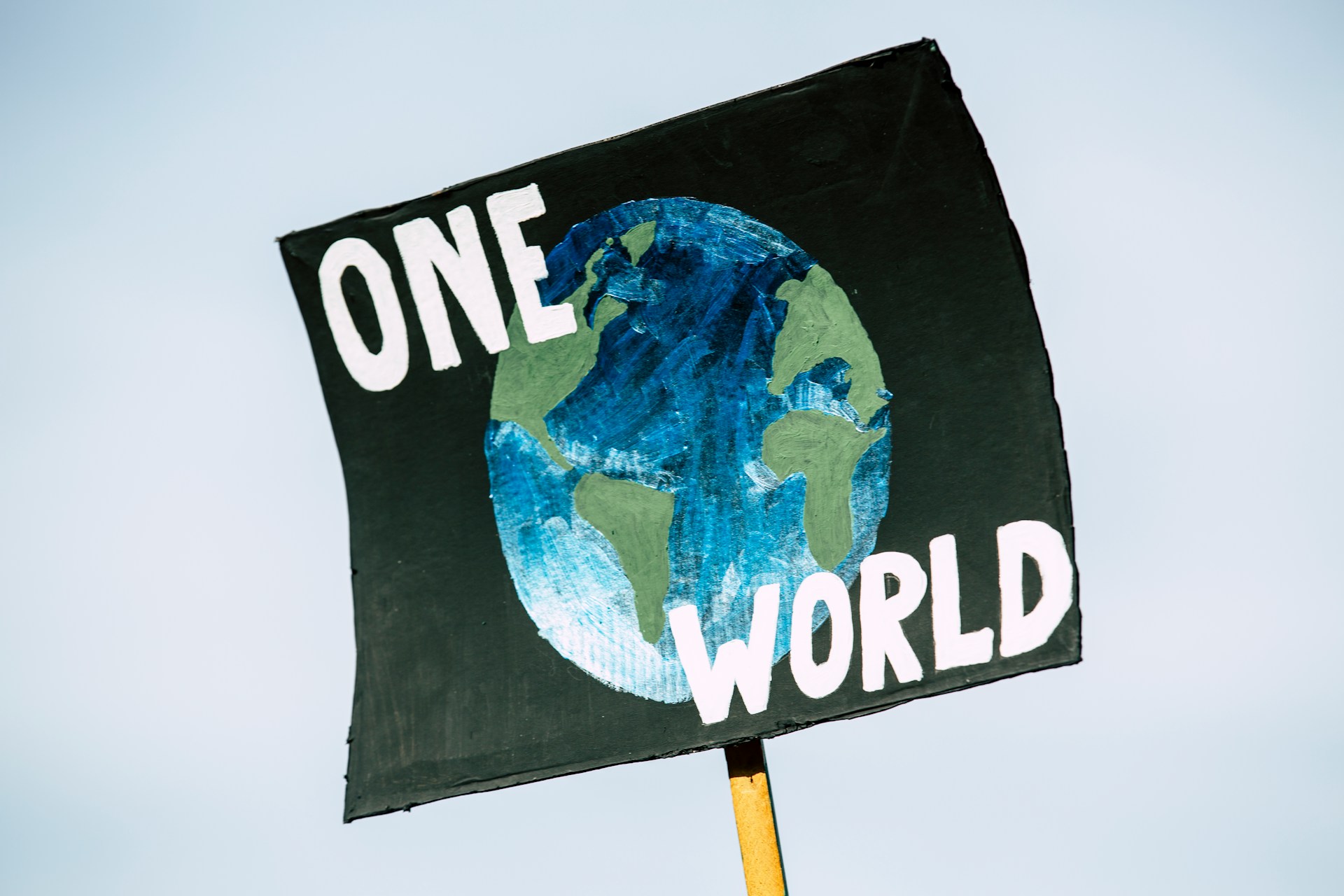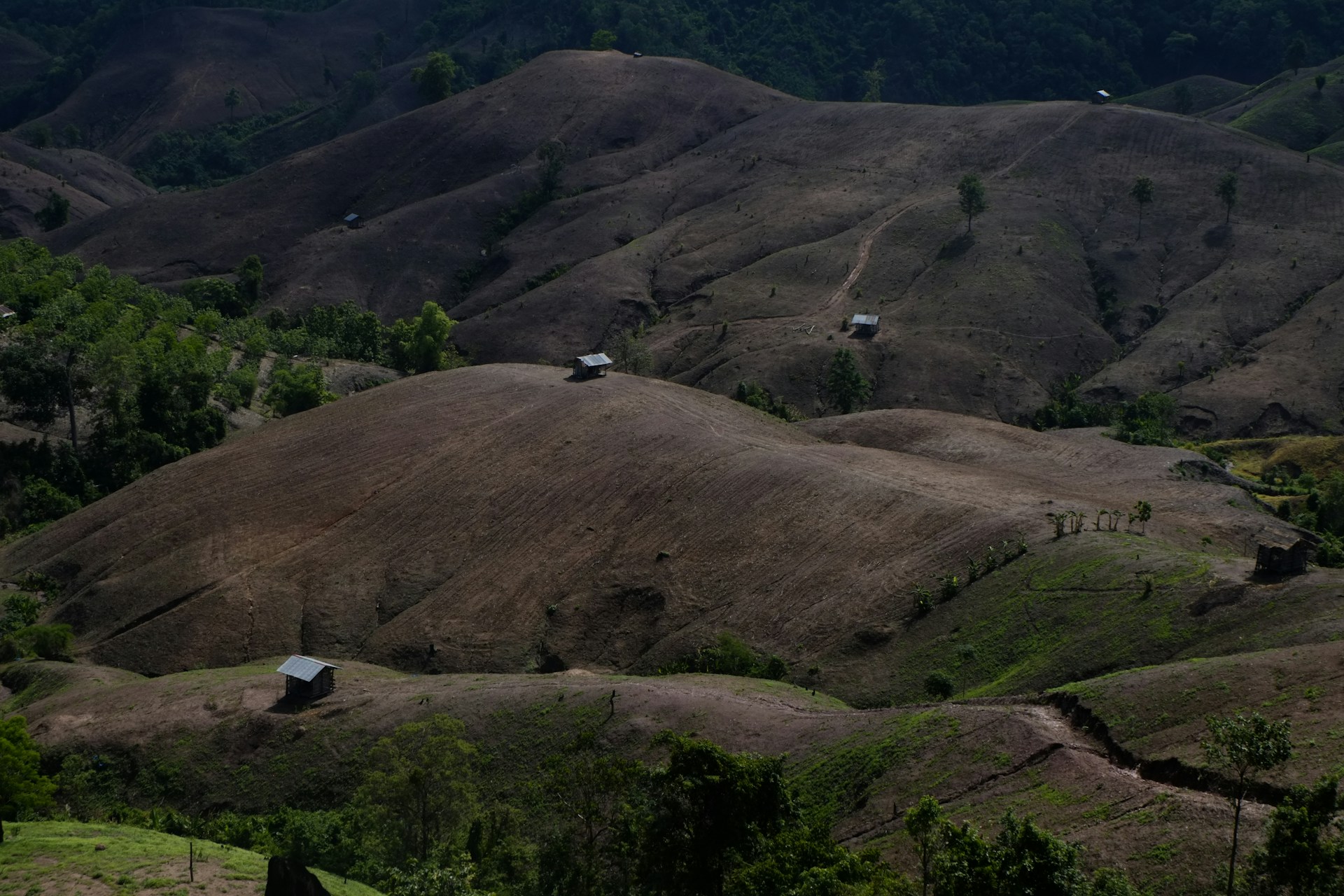
A long-delayed government report reveals biodiversity loss as an escalating threat to the UK’s security and stability. Photo credit: Boudewijn Huysmans via Unsplash.
A UK government report warning that biodiversity loss poses a serious threat to UK national security was published on 20 January, after months of delay and only following a Freedom of Information request made by Ruth Chambers, senior fellow at Green Alliance. The report, ‘Global biodiversity loss, ecosystem collapse and national security’, had originally been scheduled for release in October 2025 ahead of COP30, but was reportedly withheld because its conclusions were ‘too negative’. According to The Times, the full version ‘warned of mass migration and nuclear war’, which perhaps explains Downing Street’s reluctance to publish it.
The report, in its final published form, clearly acknowledges that biodiversity loss is both an environmental concern and a serious strategic risk to the UK’s economic stability, food systems, and geopolitical position.
As ecosystems degrade, they cease to perform the functions on which both environmental and societal systems depend.
As ecosystems degrade, they cease to perform the functions on which both environmental and societal systems depend. The UK is particularly exposed to these risks through our reliance on imports. Around 40% of the country’s food is imported, with roughly a quarter coming from mainland Europe. Disruption to agricultural systems abroad, whether through soil degradation, pollinator loss, or climate instability, will not remain distant problems. They will be felt directly through rising prices, supply volatility, and increasing pressure on domestic production.
Biodiversity underpins many of the systems on which human societies depend. Pollinators support agriculture, healthy soils rely on diverse microbial life, forests absorb carbon, and coral reefs and mangroves protect coastlines from erosion and storm surges. Biodiversity loss also carries consequences for global healthcare, for example through the depletion of pharmaceutical resources. Beyond these practical benefits, many scientists argue that nature has intrinsic value. As Dave Stone, Chief Scientist at the Joint Nature Conservation Committee, succinctly puts it, ‘nature underpins our lives, our economy, life as we know it‘.
One of the report’s key findings, assessed with high confidence, is that ‘without major intervention to reverse the current trend’, crop failure, intensified natural disasters, and infectious disease outbreaks ‘[are] highly likely to continue to 2050 and beyond’. Biodiversity loss through depleted soils, loss of pollinators, and increased risk of drought and flood conditions, is assessed as one of the biggest medium- to long-term threats to food security. The report warns that ‘ecosystem collapse would place the UK’s agriculture system under great stress’ and leave us struggling to adapt quickly enough to maintain food supply.
…the report’s starkest conclusion is that ‘every critical ecosystem is on a pathway to collapse’.
Perhaps the report’s starkest conclusion is that ‘every critical ecosystem is on a pathway to collapse’. “Collapse” is defined as an irreversible loss of function beyond repair. Severe degradation of major ecosystems such as the Amazon, Congo Basin, Southeast Asian coral reefs and mangroves, the Himalayas, and boreal forests of Russia and Canada would ‘highly likely result in water insecurity, severely reduced crop yields, a global reduction in arable land, fisheries collapse, changes to global weather patterns, release of trapped carbon exacerbating climate change, novel zoonotic diseases and loss of pharmaceutical resources.’ The consequences of crossing biodiversity loss thresholds would be extensive, ranging from increased migration and political instability to heightened risks of conflict and global economic disruption. The UK would not be insulated from global crises of this kind.
…senior political figures have repeatedly framed environmental protections as obstacles to economic growth, often without clear evidence.
Environmental groups have argued that the government’s approach to nature has not matched the urgency of these risks. Friends of the Earth has suggested that progress on biodiversity has been ‘significantly poorer than on climate’. They state that senior political figures have repeatedly framed environmental protections as obstacles to economic growth, often without clear evidence. In doing so, public debate has narrowed, with environmental policy reduced to carbon and energy, rather than recognising biodiversity as the foundation upon which ecosystems rest.
This comes at a time when broader environmental concerns appear to be slipping down the list of immediate global priorities. The World Economic Forum’s Global Risks Report 2026 found that biodiversity loss and ecosystem collapse have taken lower short-term priority compared to last year, with world leaders turning their attention instead to societal polarisation, misinformation, and geoeconomic tensions. But the IPBES Plenary in Manchester in early February challenged this framing. The landmark Business and Biodiversity Assessment, approved by all 152 member governments, concluded that businesses depend upon biodiversity, are driving biodiversity loss, and require fundamental changes to incentivise policy and practises to support nature’s recovery.
The report leaves little room for ambiguity. With ecosystems approaching collapse, biodiversity loss is no longer a marginal environmental issue, but a direct and serious threat to economic stability and national security. Writing in The Guardian, George Monbiot described it as ‘the most important document published by the UK government since the [2024] general election’. The earlier version that remains unpublished may be more alarming still.