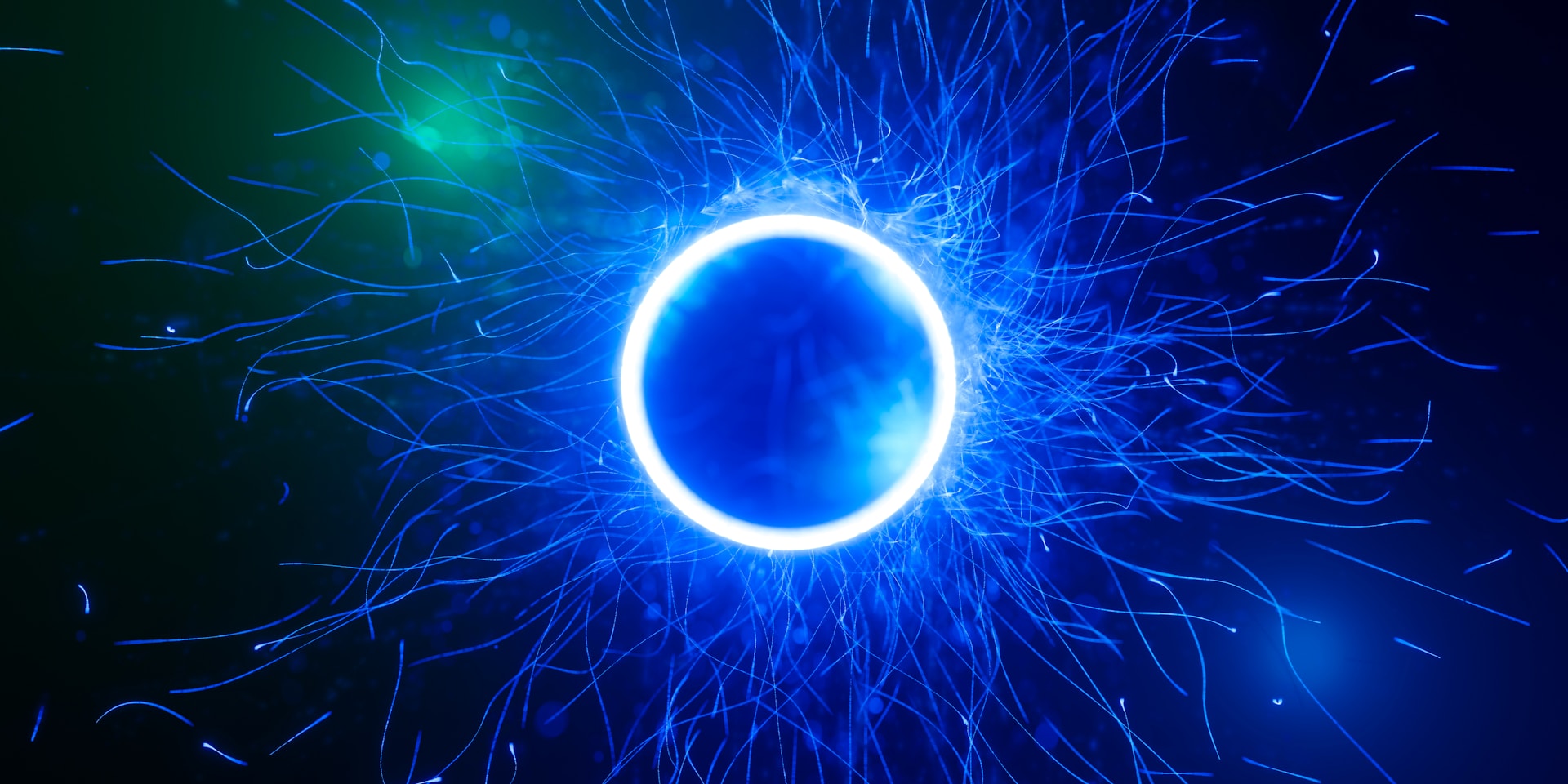
Quantum physics and biology may seem worlds apart, yet growing evidence suggests they are more deeply intertwined than we ever imagined. Photo credit: Dynamic Wang via Unsplash
The worlds of quantum physics and biology seem incompatible. Biology is full of complex, often seemingly chaotic systems, while quantum mechanics involves precise calculations for tiny particles.
Introducing quantum biology: a growing field bringing together quantum mechanics and living systems.
Since the latter half of the 20th century, it has been widely assumed by scientists that the natural world was far too messy to accommodate quantum effects for a meaningful time. Over the last few decades, new technology has allowed us to probe smaller and smaller length and time scales. This has led to new research finding that in fact, quantum effects might be the only explanation for some biological processes. Introducing quantum biology: a growing field bringing together quantum mechanics and living systems.
Of course, being made up of atoms and molecules, the natural world is intrinsically quantum. Quantum biology specifically explores whether phenomena such as coherence, tunnelling, and entanglement play a significant role in biological processes. This idea isn’t new; it was first proposed around the time theories of quantum mechanics were being developed. After the newfound success of quantum models, scientists were keen to investigate whether quantum mechanics could be the key to understanding our natural world.
Throughout the 1920s and 1930s, there was a lot of excitement about this field. Many physicists whose work had been instrumental for our understanding of quantum theories were investigating how their ideas could be applied to biology. Schrödinger’s 1944 book, What is Life? explored how physics can be used to explain the functions of a living organism. But by the second half of the twentieth century, the hype seemed to have died down: biologists were making big leaps in molecular biology without needing to consider quantum effects. Meanwhile, the majority of physicists agreed that the sensitive controls needed for quantum effects were virtually impossible to produce in biological systems.
However, recent advancements have led to growing evidence that quantum biology is functionally exploited by the natural world. It is beginning to seem that now, over 100 years later, the pioneers of the field were actually right!
Photosynthesis
Some of the strongest evidence for quantum biology can be found in photosynthesis, one of the most important biological processes. Energy from sunlight is captured and carried to a reaction centre where it is converted into fuel for plants. The light harvesting stage of photosynthesis has unusually high efficiency, meaning that almost all of the light energy absorbed is transferred to the reaction centre without being lost. It is thought that quantum effects are to thank for this puzzling efficiency.
Photons are particles of light, small packets of energy that arrive from the sun in a continuous stream. When photons hit atoms, their energy excites electrons, meaning that the electrons usually sitting happily in atoms’ shells are promoted to a state with higher energy. In photosynthesis, these excited electrons, or excitons, are then channelled to the reaction centre, where they trigger a process that drives the production of chemical fuels.
Experiments have found that different exciton states are coherent. Coherence is an important result of quantum mechanics, and can be viewed as describing when one particle is in multiple states at once: a superposition. The observed coherence suggests that the excitons can be interpreted to be exploring different energy pathways simultaneously in order to find the best route. Imagine if you could clone yourself and walk all the different routes from college to your lecture simultaneously. The clone who arrived first would “win” and the others would disappear (known as wavefunction collapse in quantum mechanics), meaning you ended up arriving in the fastest possible time. It sounds ridiculous in our classical world, but this is the beauty of quantum mechanics: counterintuitive ideas and models prove to be accurate descriptions of the inner workings of our universe.
…the beauty of quantum mechanics: counterintuitive ideas and models prove to be accurate descriptions of the inner workings of our universe.
Back to photosynthesis, where the warm, wet atmosphere of the cell surrounding the exciton was thought to limit the coherence. In fact, experiments show that the noise and chaos actually increase efficiency. This doesn’t mean that this is the only cause of the high efficiency, but does suggest that the quantum coherence observed in photosynthesis isn’t just a side effect, but a tool utilised by the organism to decrease energy losses.
Magnetoreception
Every year, over 2000 species of birds migrate between habitats with the changing seasons, with some travelling over 14,000km. As well as using visual cues, it seems that birds also utilise the Earth’s magnetic field to navigate. It is not yet fully clear exactly how they sense magnetic fields, but it is theorised that quantum coherence is an important contributor to this magnetoreception. A protein inside birds’ eyes, called cryptochrome, is thought to be responsible for this magnetoreception. It has been shown to be affected by even weak magnetic fields, and its presence increases during migratory periods for birds, while staying constant for birds who don’t migrate.
A photon enters the bird’s eye and causes an electron in the cryptochrome molecule to be excited (promoted to a higher energy). This leads to the formation of a pair of free radicals, which are molecules with unpaired electrons. These unpaired electrons possess a property called spin. Spin, similar to charge or mass, is just another way of describing a particle and, crucially here, is affected by magnetic fields.
The free radicals formed oscillate between allowed states before recombining to form a chemical product. It is during the state mixing that the external magnetic field influences the radicals. The chemical product is then sensed by neurons, giving the bird information about the magnetic field it is experiencing. The Earth’s magnetic field changes with latitude (how north or south it is), providing extra information to help the bird navigate its long journey.
The process outlined here is not yet fully evidenced, and there is still lots of investigation into exactly how the magnetoreception in birds works. A new project led by Oxford University, Quantum Sensing in Nature and Synthetic Biology, aims to investigate this further. Involving disciplinary researchers from multiple institutions, they hope to understand the magnetic sense, and investigate how we can harness it in biotechnologies.
Smell
Another sense that likely uses quantum effects is smell, or the olfactory sense. We know that the shape and size of molecules determines how they smell, but some scientists now also believe that the vibration of molecules plays a role.
Experiments show that molecules with similar vibrational frequencies elicit the same smell despite having different shapes. Additionally, when comparing the odours of deuterium and hydrogen, which have the same shape, some experiments find that they have different odours. This effect can only be explained if the vibrations of molecules is considered in the olfactory sense. The current theory is that electrons from the odour molecule utilise quantum tunnelling to reach the acceptor in the receptor, but only when the energy difference of these sites matches the vibrational energy of the molecule.
Quantum tunnelling is when particles seem to “jump over” energy barriers despite having insufficient energy; imagine a marble suddenly appearing outside of a jar it had been inside. Tunnelling seems impossible for our classically-trained minds to comprehend, but it can be explained by treating particles’ positions as waves. This wave-particle duality is the basis of quantum mechanics and quantum tunnelling is an important result.
Enzyme action
Models for quantum tunnelling are consistent with experimental observations of enzymes, with it even being shown that some enzymes can adapt the amount of tunnelling to the temperature of the reaction. There is some debate as to whether enzymes actually use quantum tunnelling or if it would occur in reactions regardless of the enzyme’s presence. To test this, scientists would need to compare the tunnelling in reactions with and without enzymes. This can be tricky experimentally, as most reactions won’t occur without their enzyme catalyst. Some experiments have found that enzymes don’t affect the amount of tunnelling, suggesting that enzymes aren’t actually using the tunnelling to their advantage, but further research is still needed to confirm this.
DNA mutations
The process behind some DNA mutations is also thought to use tunnelling. Mutations are an intrinsic property of DNA. They occur when there is a change to the sequence of bases in the genetic code, and often don’t affect the observable characteristics of the organism.
There are multiple types of mutation, including both spontaneous and induced mutations. To explain how a particular type of spontaneous mutation occurs, some scientists are drawing on a model first proposed by Löwdin in 1963. He suggested that the hydrogen nucleus in the bond between base pairs can change position with quantum tunnelling. This changes the base, subsequently leading to mutations. Recent theoretical and computational studies indicate that quantum tunnelling of the hydrogen nucleus is facilitating these mutations, but further probing is needed to come to a strong conclusion.
Consciousness
Consciousness is something science understands very little about, however some physicists believe that quantum biology could provide us with the answers. This is an exciting prospect, but generally understood by scientists to be overly optimistic and lacking evidence.
There are two main theories of quantum consciousness: orchestrated objective reduction theory (Orch OR), proposed by Roger Penrose and Stuart Hameroff in 1994, and the potential of phosphorus as a basis for quantum computation, popularised by Matthew Fisher over the last decade.
Orch OR says that gravitational instabilities lead to consciousness. It focuses on microtubules, which are found in neurons in the brain. When they absorb light, they then release this light after a small delay. This effect is called delayed luminescence. Some studies have found that anaesthetics quench this behaviour, suggesting that they play a role in how the brain processes information.
Fisher explored whether there is quantum entanglement in the brain, and found that the only possible basis for this is phosphorus. Phosphate molecules (phosphorus and oxygen) are produced in triplets. Two of these phosphates are separated from the other, and form an entangled pair. This means that they are still connected by quantum mechanics, despite being separated spatially. Fisher hypothesises that this entanglement, which is preserved as the phosphates join protective clusters, is the basis for brain function.
While both of these theories are intriguing, and often reported on in the media, there is very little agreement within the quantum biology community as to their validity. They are difficult to test experimentally, and have little evidence to support further testing. The field largely agrees that the answers to consciousness are unlikely to be found in quantum biology very soon, if at all.
The future
Designing biology-inspired quantum technology can teach us about quantum’s applicability to real biological systems. There is lots of potential to use the quantum effects described in devices ranging from photovoltaic cells (which form solar panels) inspired by the tunnelling in photosynthesis, to engineering proteins that can sense magnetic fields. Many scientists are interested in how we can apply quantum biology to help us in the development of quantum computing. For example, understanding how nature seems to maintain coherence without being affected by surrounding noise could allow us to build a quantum computer that functions without the requirement of a specifically controlled environment.
After billions of years of evolution, it doesn’t seem surprising that biology has learned to take advantage of the quantum effects we understand are fundamental to how the universe operates.
The extent to which quantum mechanics plays a non-trivial role in nature is still under investigation. After billions of years of evolution, it doesn’t seem surprising that biology has learned to take advantage of the quantum effects we understand are fundamental to how the universe operates. On the other hand, many argue that nature cannot select against the quantum-mechanical basis of chemistry.
In the future, new techniques to probe smaller and smaller into biological organisms, as well as our bioengineering of quantum-inspired technologies, will allow us to explore this connection further and delve into the possible quantum roots of life.