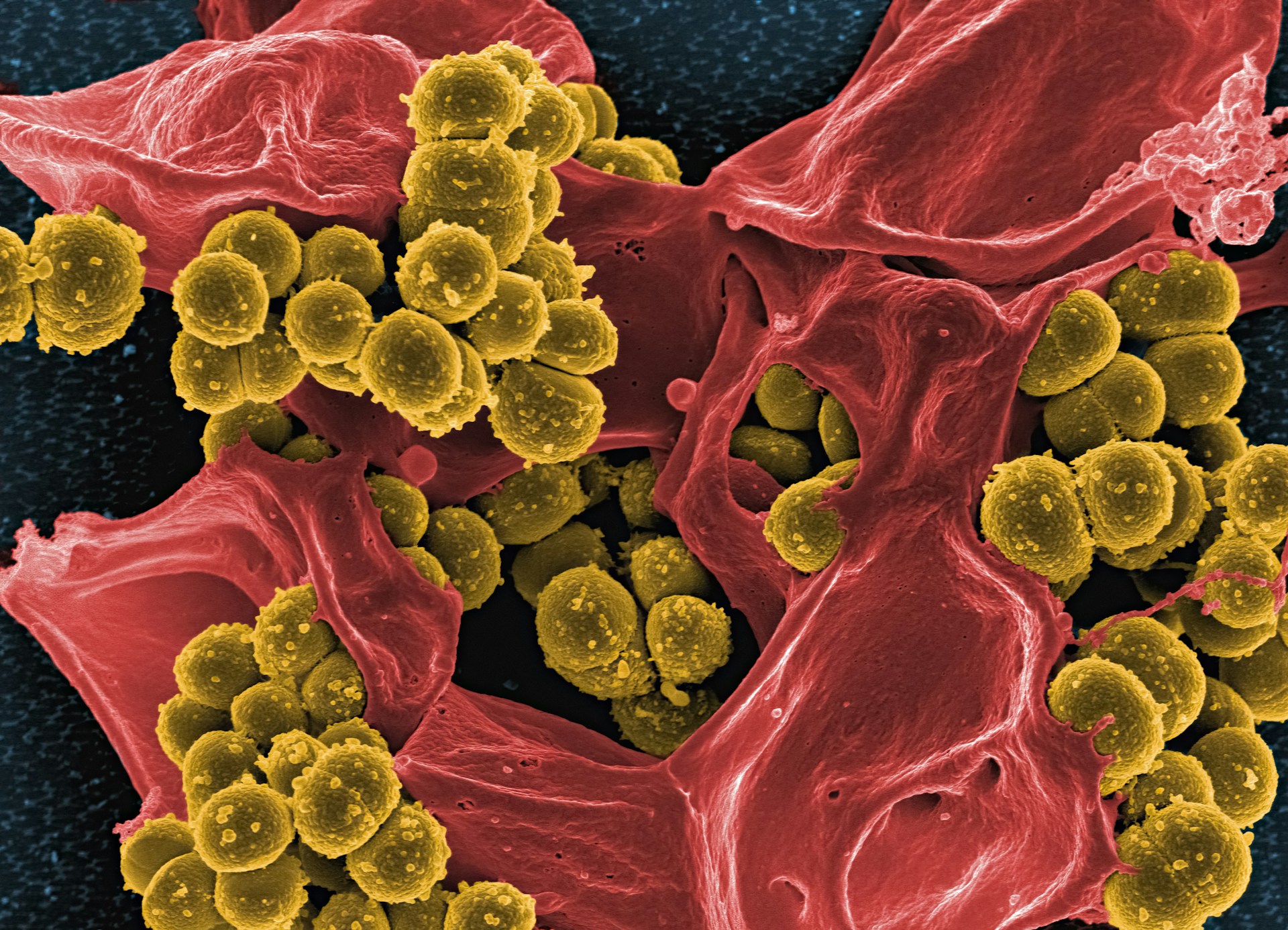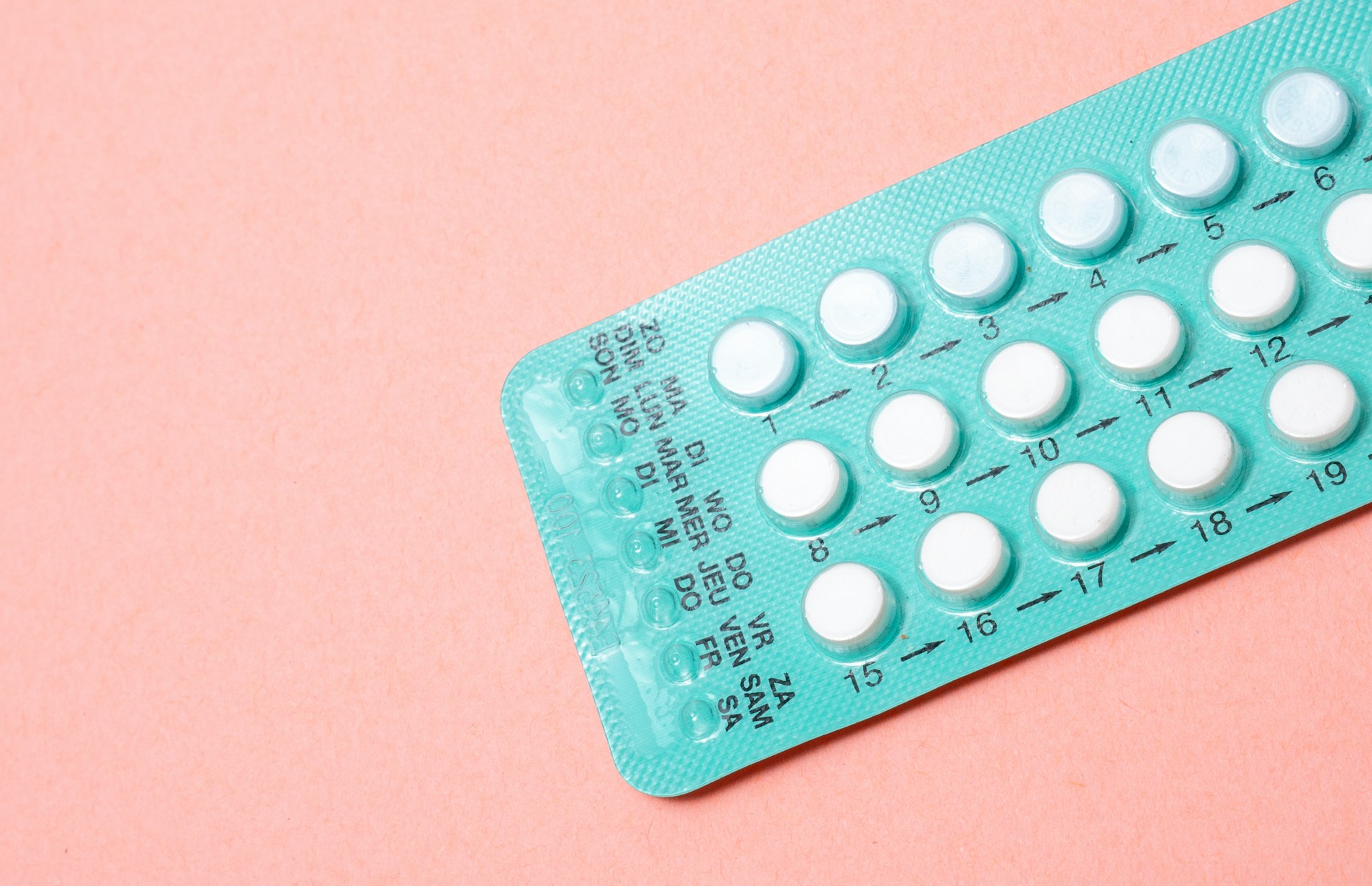
Despite promising breakthroughs, new male contraceptives remain stalled by development and production challenges. Photo by Reproductive Health Supplies Coalition on Unsplash
…the first sales of rubber condoms were in 1855. However, there has been nothing new on the market for men since then.
Currently, there are only two male contraceptives available: condoms and vasectomy. This limited choice poses significant barriers to greater male involvement in family planning, relying on contemporary and historic contraceptive options that place heavy responsibility on women. Condoms are not a recent invention: the first medical trial of condoms was in 1564, and the first sales of rubber condoms were in 1855. However, there has been nothing new on the market for men since then. This article will focus on the promising modern industry of male contraceptives, specifically non-hormonal, highlighting their barriers to development and production.
Why non-hormonal contraceptives?
…many who use such hormonal contraception experience side-effects…
The extensive side-effects of female hormonal contraceptives have entered global discussion in recent years. Hormones, by their nature, have systemic impacts. This means that hormonal contraception will not only affect the target system (in this case the reproductive system) but also have systemic effects at any location where a hormonal receptor is present- often throughout the whole body. For hormonal contraceptives used by females, this relates to oestrogen and progesterone receptors- which are not only found in the reproductive system, but also in the brain and kidneys amongst other organs. For potential male hormonal contraceptives, this would relate to testosterone receptors which are present not only in the testes, but also in the brain, bones, skin, and skeletal muscles. Currently, most modes of contraception used by females are hormonal methods, including the pill, the implant and injections. However, many who use such hormonal contraception experience side-effects, the range of which are extensive and the list too long to address within this article. These side effects have been overlooked for far too long and if women experience such side effect profiles when using hormonal methods, why would we begin our search for male contraceptives here?
When designing a new medication, you need to choose a target site where the medication will exert its effect. The potential targets for non-hormonal male contraceptives are extensive but there are three clear promising choices.
EPPIN
EPPIN is a sperm-specific surface protein that modulates post-ejaculatory sperm motility. Motility is a term used to describe sperm’s ability to swim, an essential process needed for the sperm to reach and fertilize the egg. Promising studies on macaques have shown that targeting EPPIN with small organic compounds (eg EPO55) can suppress normal sperm motility within 30 hours of intravenous infusion and has full reversibility within 18 days. Without this motility, the sperm is unable to reach the egg, thus creating a contraceptive effect. It is natural to critique such studies, given that important developmental stages for sperm (eg meiosis and spermiogenesis) occur at different times in different species (known as inter-species heterochrony). However, targeting EPPIN targets post-meiotic processes. Studies have suggested that there are many conserved characteristics between species post-meiotically, as well as similar gene-expression in the testes, endothelial and surrounding immune cells. This suggests that whilst there are differences, macaques are likely good models for human sperm. This shows significant promise for EPPIN as a male non-hormonal contraceptive target.
Catsper
Catsper is a sperm-specific ion channel involved in a number of processes that are required for successful fertilization to take place. These include: hyperactivation (a process that increases sperm’s swimming ability), chemotaxis (a process that guides the sperm towards the egg through chemical signalling), capacitation (a process that ‘activates’ the sperm so it is ready to fertilize the egg) and the acrosome reaction (the release of enzymes that digest the outer layer of the egg so that the sperm can penetrate it). Catsper’s permeability facilitates calcium ion entry into sperm cells, a physiological requirement for these processes to take place. Catsper’s biological necessity for sperm function makes it a promising contraceptive target. A key benefit of Catsper, as with EPPIN, is its sperm-surface localisation, making it unlikely to produce on-target, off-site side effects. Thus, it avoids the systemic side-effects that are often seen in hormone-targeted contraceptives.
Additionally, this exclusive expression could allow for administration by either sexual partner. Post-ejaculatory sperm are present in the female reproductive tract, thus warranting research for a Catsper-targeting drug that could be administered by a female, but still targets male sperm. Safety testing for a female mode of administration has been investigated using female knockout mice (mice that lack genes encoding Catsper channels), which showed no negative symptoms, thus suggesting that this mode of contraception would not cause significant side effects in females. The male knockout mice on the other hand successfully displayed infertility- showing that disruption of Catsper is an effective contraceptive. Potential for dual-administration is a promising characteristic that warrants further investigation. Dual administration could improve compliance and efficacy, and allow for shared contraceptive responsibility. More research regarding safety in human studies is needed in order to progress this avenue of research. Recently, large-scale investments (Gates Foundation investment in Dundee) have recognised this research gap, providing funding for progress to be made in this field of research.
sAC
Soluble Adneylyl Cyclase (sAC) is, of all the options, the newest avenue of research. In 2023, Balbach et al showed the potential of an on-demand, reversible contraceptive through inhibition of an enzyme called sAC, using small molecule inhibitors that can selectively target sAC. sAC is required for sperm maturation, motility, and functionality (variants in the human sAC coding gene (ADCY10) lead to sterility). Thus it warrants investigation for its application as a contraceptive target. Balbach et al showed that in mice, full infertility was achieved within 30 minutes, with full fertility restoration the following day. Such successful and short-acting effects open the doors for “on-demand” male contraception, where the contraceptive could be administered shortly before sex, thus requiring less predictability of sexual encounters.
What is stopping male contraceptive development?
The mentioned studies show promising results, but have not yet translated to the market products. There are a number of reasons for this.
The first is scientific. The complex nature of spermatogenesis poses a challenge, as sperm development includes multiple genetic, molecular, morphological and physiological changes, each occurring in different locations within reproductive anatomy. With over 100 regulatory genes involved it is difficult to recapitulate this complexity in vitro during trials, which ultimately decreases the likelihood of reaching the market.
Limited pharmaceutical support for male contraceptive trials has resulted in poor funding and smaller clinical trials that yield lower impact results.
The next reason is pharmaceutical. Limited pharmaceutical support for male contraceptive trials has resulted in poor funding and smaller clinical trials that yield lower impact results. Reasons underpinning the limited pharmaceutical interest in male contraceptive development include: concern of poor financial returns from a perceived small market, religious objections, risks of lawsuits (as seen with some female contraceptives) and competition from female contraceptives. Some companies even claim redundancy of these new non-hormonal male contraceptive targets, due to their lack of STI protection. However, this argument can be easily challenged by comparison with female contraceptives, on the market, that similarly provide no protection against STIs.
The perceived “small market” cited by pharmaceutical companies warrants critique. When family planning is regarded as a “female issue”, an argument can be made that demand for male contraceptives would be small. However, attitudes towards family planning and contraceptive responsibility are changing from a female-centric problem to shared responsibility. Particularly in monogamous heterosexual partnerships, non-barrier contraceptive alternatives, that allow partners to share contraceptive responsibility, would ease contraceptive burden. Additionally, increased male contraceptive options would empower men to have more reproductive control of their bodies, in a world where there are currently only two options: condoms and vasectomy. Worldwide, vasectomy and condoms total just 15.92% of contraceptive use. This small percentage suggests that only a small proportion of the population find vasectomy and condoms an acceptable contraceptive option. Studies have revealed that 75% of cis-male are willing to use new male contraceptives, as seen by Nguyen and Jacobsohn.
Male contraceptives have the potential to transform existing contraceptive attitudes from a female’s responsibility towards a shared one. Recognising existing demand, the Paris Manifesto aims to bring at least one reliable, reversible and affordable male contraceptive to market by 2026. Will they be successful? Only time will tell.