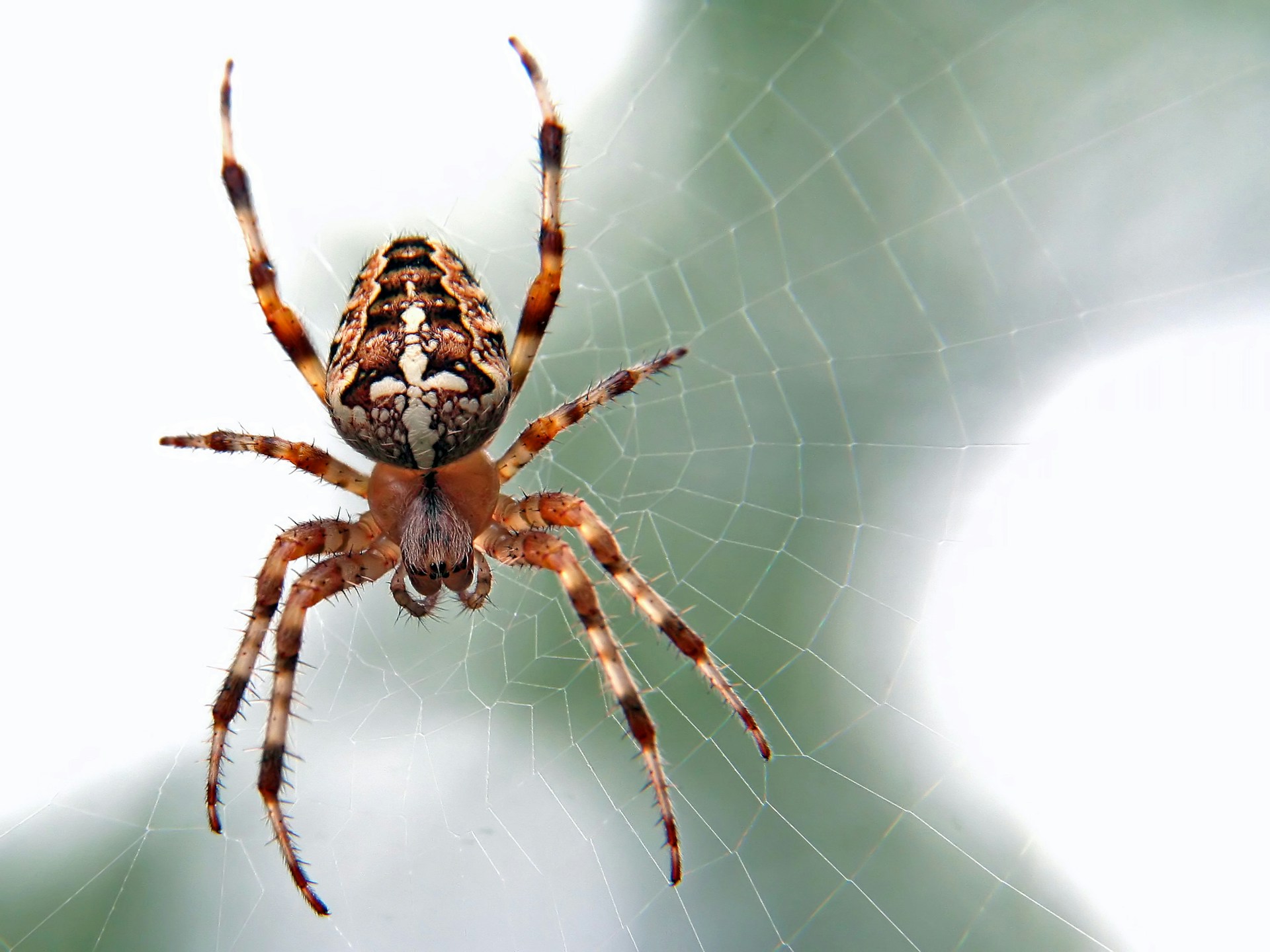
Spiders may be feared as relentless predators, but many are quietly snacking on plants in a surprising twist on their carnivorous reputation. Photo credit: Ed van duijn via Unsplash
The spider. One of nature’s most feared predators, most commonly seen lurking in a corner or in a crevice, waiting for their next meal. Waiting for some unfortunate insect (or other spider) to make the worst mistake of its life, getting caught in a tangled mess of a web and alerting the predator to its presence. The bite comes shortly afterwards. Only one is needed. As the insect’s body starts to fail, the spider wanders off, planning on returning later to sink its fangs into its latest kill.
This is the stereotypical spider. A cold-blooded, unfeeling, and immensely effective killer. With a hunting strategy that revolves around ensuring that this one bite is effective, it’s no wonder that some spiders have evolved venom powerful enough to endanger humans. But as we all know, spiders don’t want to eat us—they want nothing to do with the giants that could flatten them whenever they feel like it. And with over 50,000 species of spider worldwide, some aren’t even that bloodthirsty for insects, opting to substitute these nutrients for plants instead. There isn’t a single spider that will turn down a nice, nutritious insect, but why would a spider waste the perfectly good plant food that doesn’t try to run away when the arachnid is hungry?
…but why would a spider waste the perfectly good plant food that doesn’t try to run away when the arachnid is hungry?
The main issue for a spider looking to get an easy meal from the nearby tree is its mouth. Spiders, alongside their close arachnid relatives such as scorpions, are fairly unique in the animal kingdom when it comes to food choice as they mostly consume liquid food. Rather than putting in the effort to chew food to render it in a digestible state, spiders are lazy, and rely on extra-oral digestion, where they regurgitate digestive fluids onto their food. These fluids contain a wide variety of enzymes that break apart specific molecules, turning them into a nutrient-rich soup that can later be swallowed. Notably, these digestive fluids are different to a spider’s venom; venom is injected through the fangs on the big scary chelicerae at the front of the spider’s mouth, rather than coming from the gut (though both fluids contain enzymes that help in digestion). After using this technique for so long, spiders have lost the ability to chew, making it incredibly difficult to get through the thick, fibrous walls of plant matter. Theoretically, spiders could try to digest plants the same way that they digest animals, but this would require the slow evolution of a whole new array of digestive enzymes to make this strategy possible.
Despite this, spiders have still pioneered ways to get around their unique mouthparts and extract food from plants. After all, every food source helps organisms survive the unforgiving laws of nature. Interestingly, it also isn’t just one single group of spiders that has decided to adopt a more vegetarian lifestyle; consuming the products of plants is a worldwide phenomenon shared among many spider families.
A thirst for sugar
The simplest way for a spider to get liquid food from a plant is to just… take the plant’s liquids. Plants regularly produce nutrient-rich liquids for various reasons and for a lazy spider, this presents a perfect opportunity. Nectar is one such liquid, packed with sugars and amino acids, often used by plants to reward pollinators for pollen transport between flowers. Spiders are not effective pollinators. This doesn’t stop them going for the reward though—multiple species of spider, including 90 species of jumping spider and several other families of larger hunting spiders have been observed feasting on flowers. The benefits of this strategy are obvious; it is free food. This is especially important for smaller spiders that lack the strength to take down an insect. The nutrients packed inside nectar have been shown to increase the lifespans of both juvenile spiders and adult male crab spiders, which increase the odds that these spiders will find love and pass their nectar-feeding abilities onto the next generation.
The intoxicating effects of nectar are well utilised by plants. It is this vice that both Venus “flytraps” and pitcher plants exploit to make spiders a massive part of their diets. Other plants engage in more mutual relationships, luring spiders in with nectar produced in nectaries outside flowers, with the aim of having the spiders predate on herbivorous insects that would otherwise be munching through their leaves. Spiders aren’t the only ones to occupy this niche—ants are also often avid defenders of nectar-producing plants. But this doesn’t discourage certain spiders. The jumping spider Orsima ichneumon (which looks somewhat like an ant) is known to live on trees with ant colonies, guarding and defending nectaries from the colony’s workers using its webs. Clearly, nectar is a prize worth fighting an army for.
Sap, transported in phloem vessels, is another nutrient-rich liquid. It transports nutrients within the plant, and is not intended for consumption by animals. Nevertheless, there have been reports of a few species using their fangs to bite into these vessels to let the fluid ooze out, ready for consumption. Other spiders have been observed consuming honeydew, the sugar-rich, liquid remains of sap after it has passed through the digestive system of sap-sucking insects like aphids and leafhoppers. Whilst spiders do not actively defend sap-suckers from other insects like ants do, some will happily consume drops that fall into their domains.
A side of spores
Those unlucky enough to have hay fever would know that pollen gets everywhere. Orb-weaver spiders experience this torrent too—their huge circular nets spanning across open spaces are just begging to catch pollen. In fact, the pollen is often attracted to the webs because the sticky capture spiral is covered with droplets, containing ionic charges that will be attracted to the electrostatic charge of airborne particles, regardless of whether this charge is positive or negative. As pollen and other particles, such as fungal spores or just simple dust, accumulate on an orb-weaver’s web, it loses its sticky properties and must be replaced. Orb-weavers therefore consume their own webs using the same method of extra-oral digestion, taking the proteins used to make silk and recycling them into new silk. Naturally, as pollen grains are small, many will fit inside a spider’s digestive tract and will be eaten accidentally.
The spiders intentionally consume pollen from their webs…this is another source of free food that works wonders in keeping smaller spiders alive.
Except this isn’t the whole story. Pollen grains vary in size, and many are too large to fit into a spider’s mouth. Yet, spiders still consume these—as one study demonstrated by feeding orb-weaver spiderlings tree pollen. The spiders intentionally consume pollen from their webs, likely using their signature method of extra-oral digestion. This ability comes with great benefits; this is another source of free food that works wonders in keeping smaller spiders alive. These benefits may be especially important in spring, where adult insects are scarce but pollen is bountiful. As such, pollen makes up around 25% of orb-weavers’ diets in the wild. The taste for pollen goes beyond survival though, as when given all the fly food they could ever ask for, oak spiders still consumed a similar proportion of pollen. To spiders, pollen is just another component of a healthy diet.
Pollen-feeding behaviour is displayed among many other spider families as well. Web-making sheet-weavers and cobweb spiders will also consume caught pollen, while more active hunting spiders will consume pollen directly from flowers. Much like with nectar, plants also seem to exploit this hankering by trapping pollen to lure in the spiders that keep herbivores at bay.
As mentioned before, fungal spores (despite not being plants) may also get caught in webs too. The outer walls of fungal cells are made from chitin—the same protein that insect exoskeletons are made from. It’s no surprise therefore that spiders are well-equipped to consume fungi as well, though it should be known that these do not seem to provide much nutritional value to spiders, with a diet of only spores being insufficient to keep spiders from starving.
An exotic staple
Deep in the jungles of the Americas, some spiders have adopted an even stronger affinity for plants, going so far as to consume solid plant material. Unfortunately, by virtue of these species being localised to the depths of the rainforest, we still do not know how these spiders are able to consume these foods, though it is likely they still use extra-oral digestion to liquefy these nutrients.
Just like the nectary-defending Orsima ichneumon, these spiders exploit the symbiotic relationship between plants and ants to carve out their own strategy to survive. One such symbiosis is observed between Vachellia acacias and Pseudomyrmex ants. The acacia provides ants with shelter inside its thorns, and provides food in the form of nectar and Beltian bodies, specialised leaf structures packed with proteins and sugars. In return, the ants patrol and defend the plant from herbivory, and clear out other vegetation near the host plant to avoid competition for resources. Nestled between these partners, the adorably-named jumping spider Bagheera kiplingi (yes, named for Rudyard Kipling’s The Jungle Book) makes the most of the acacias’ offerings. Building their nests on older leaves to evade detection by ant patrols, B. kiplingi stealthily sneaks around its home tree to reach and harvest the prized Beltian bodies. This strategy is sufficient to satisfy most of the spider’s needs—making up 90% of its diet!
Nevertheless, B. kiplingi is still not fully vegetarian. It usually supplements its diet with larvae from the local colony, which may serve purposes other than simple food. Consuming larvae may enable the spider to use the compounds within to effectively “smell” like the ants and evade detection. Alternatively, consuming the larvae might be what allows B. kiplingi to savour Beltian bodies in the first place, as the spider may harvest the digestive enzymes required to extra-orally digest these leaves from the ants. Regardless, it is still impressive that B. kiplingi’s herbivory has reached this extent, especially considering that its closest relative, Bagheera prosper, remains mostly carnivorous. This is also not the only example of spiders going for these special foods; Clubiona spiders have also been observed going for Müllerian bodies in Cecropia trees, though this is far less studied. With the right tools (and convenient packaging), spiders have been able to enjoy the taste of plants, alongside many others in the animal kingdom.
Spider omnivory
…despite their reputation, spiders are just like any other animal trying to use whatever food they can so they can survive in an unforgiving world.
There is strong evidence to suggest that certain spiders gain nutrition from nectar, sap, pollen, and specialised leaves. Nevertheless, this may only be the tip of the iceberg—there are sparse reports of spiders sucking on seeds, consuming fluid from the pollen-catching stigmas in flowers, and even tarantulas eating grapes (though the evidence for all these so far is only anecdotal). It is often assumed that in nature there are herbivores, carnivores, and occasionally, omnivores. The reality though, is that animals do not fit neatly into these little boxes; “traditional herbivores” will take a quick bite out of other animals, and “traditional carnivores” are happy to supplement their diets with plants or other non-animal life. Spiders are no exception. Ultimately, despite their reputation, spiders are just like any other animal trying to use whatever food they can so they can survive in an unforgiving world.